Is Canned Corn Safe for Dogs?
Veterinary pet-care sources including the American Kennel Club, PetMD, and VCA Hospitals describe corn as non-toxic to dogs. It is not listed among foods that cause poisoning, and plain corn kernels are generally discussed as tolerable for many dogs.
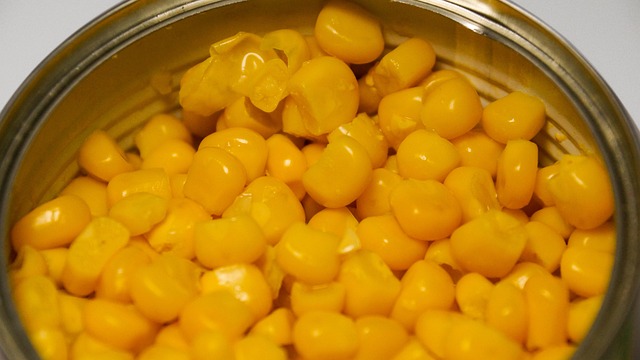
Canned corn, however, is typically discussed with more caution in veterinary literature. The primary concerns raised relate to added sodium and processing, rather than to the corn itself. For this reason, canned corn is usually placed in a caution category rather than being considered broadly safe.
Across pet-nutrition references, preparation and ingredients are repeatedly identified as the key factors influencing suitability.
Why Canned Corn Can Be a Problem for Some Dogs
Main factors of concern
- Added salt, which veterinary sources note is commonly present in canned vegetables and may contribute to digestive upset.
- Preservatives or additives, depending on the product, which may increase the likelihood of stomach irritation.
Portion size and dog size
Veterinary articles note that tolerance varies between individual dogs, but processed foods are generally described as more likely to cause issues than fresh or plain foods.
Preparation differences
Plain cooked corn is discussed differently from canned corn, which is specifically noted for its higher sodium content in pet-nutrition sources.
Signs Reported When Dogs React Poorly to Canned Corn
Veterinary sources commonly associate unsuitable or salty foods with:
- Diarrhoea
- Vomiting
- Increased thirst
- Abdominal discomfort
More serious signs
- Ongoing gastrointestinal upset linked to excess sodium intake
Ingredients or Additives to Watch For
- ❌ Added salt (frequently present in canned corn and noted as a concern in veterinary literature)
- ❌ Butter or flavourings (sometimes included in canned or packaged corn products)
- ⚠️ Sugar (present in some sweetened canned corn varieties)
Puppies vs. Adult Dogs
Veterinary sources indicate that puppies may be more sensitive to digestive disturbances from processed foods. Concerns related to salt and additives apply to both puppies and adult dogs.
Other Common Variants of Corn
Fresh Corn Kernels
Veterinary pet-care articles generally describe plain kernels as non-toxic when removed from the cob.
Corn on the Cob
Veterinary sources consistently classify corn cobs as unsafe due to the risk of gastrointestinal obstruction.
Frozen Corn
Frozen plain corn is discussed similarly to fresh corn, with fewer concerns than canned varieties when no additives are present.
Dog-Friendly Alternatives Mentioned in Pet-Nutrition Sources
- Plain green beans
- Plain carrots
- Plain pumpkin
Frequently Asked Questions (FAQ)
This FAQ summarises themes appearing in veterinary pet-care articles.
It is informational only and not a substitute for professional veterinary care.
Is canned corn toxic to dogs?
Veterinary sources state that corn itself is not toxic, but canned corn may pose risks due to added salt or other ingredients.
Why is salt a concern in canned corn?
Pet-nutrition references explain that high sodium intake can contribute to digestive upset and other health issues in dogs.
Is fresh corn different from canned corn?
Veterinary articles distinguish between plain corn and canned corn, with processing and additives being the primary difference.
Source Reference
This page compiles information from publicly accessible veterinary and pet-safety resources, including:
-
American Kennel Club (AKC) — “Can Dogs Eat Corn?”
https://www.akc.org/expert-advice/nutrition/can-dogs-eat-corn/ -
PetMD — “Can Dogs Eat Corn?”
https://www.petmd.com/dog/nutrition/can-dogs-eat-corn -
VCA Hospitals — “Can Dogs Eat Corn?”
https://vcahospitals.com/know-your-pet/can-dogs-eat-corn
This page is informational only and does not constitute veterinary or medical advice. Readers are encouraged to review the cited sources directly.