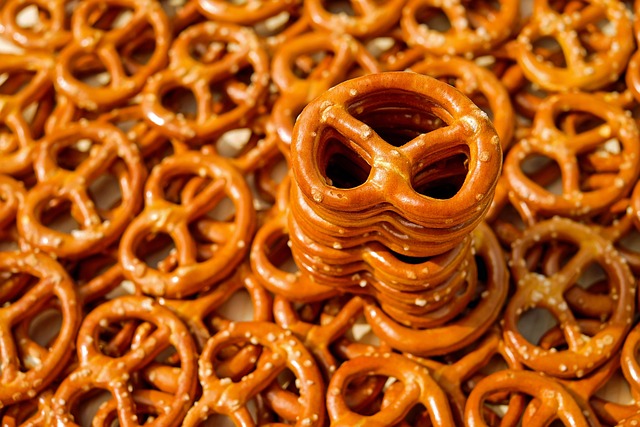
Are Pretzels Safe for Dogs?
According to veterinary and pet-nutrition sources including the American Kennel Club and PetMD, pretzels are not considered toxic to dogs. They do not contain a single ingredient that is classified as poisonous in standard veterinary toxicology references.
However, veterinary literature consistently categorises pretzels as a food of concern. This classification is based primarily on nutritional composition rather than toxicity.
Why Pretzels Can Be a Problem for Some Dogs
Very high salt content
Veterinary nutrition articles frequently note that pretzels are extremely high in sodium. Excess salt intake is associated with dehydration, increased thirst, and other systemic concerns in dogs.
Refined carbohydrates
Pet-nutrition sources highlight pretzels as a highly refined grain product, which provides minimal nutritional value and may contribute to digestive upset.
Seasonings and coatings
Veterinary literature points out that pretzels may be coated or flavored with garlic powder, onion powder, cheese flavorings, or spices, some of which are classified as toxic or unsuitable for dogs.
Signs Reported When Dogs React Poorly to Pretzels
Veterinary sources describe the following possible signs associated with high-salt or processed snack foods:
- Increased thirst
- Vomiting
- Diarrhoea
More serious signs
- Signs associated with excessive sodium intake, such as lethargy or weakness, as discussed in veterinary nutrition literature
Ingredients or Additives to Watch For
Veterinary sources distinguish plain baked goods from seasoned snack foods:
- ❌ High salt (sodium) — a defining feature of pretzels
- ❌ Garlic or onion powders — classified as toxic to dogs by veterinary toxicology sources
- ⚠️ Cheese or butter coatings — increase fat and calorie content
- ⚠️ Pretzel dips — may contain additional salt, sugar, or toxic ingredients
Puppies vs. Adult Dogs
Veterinary nutrition sources note that puppies and smaller dogs may be more sensitive to salt intake due to body size and developing organ systems. The sodium-related concerns discussed for pretzels apply to dogs of all ages.
Other Common Variants of Pretzels
Soft pretzels
Veterinary sources discuss soft pretzels similarly, noting comparable salt levels and refined carbohydrates.
Hard pretzels
Pet-nutrition articles highlight hard pretzels as a choking or dental concern in addition to salt content.
Flavored pretzels
Veterinary literature identifies flavored varieties as higher risk due to added seasonings and coatings.
Dog-Friendly Alternatives Mentioned in Pet-Nutrition Sources
Veterinary and pet-nutrition articles commonly reference the following snacks as examples discussed in canine diets:
- Plain vegetables
- Fruits listed as safe for dogs
- Commercial dog treats formulated with controlled sodium
Frequently Asked Questions (FAQ)
This FAQ summarises themes appearing in veterinary pet-nutrition articles.
It is informational only and not a substitute for professional veterinary care.
Are pretzels toxic to dogs?
Veterinary sources do not classify pretzels as toxic. Concerns focus on high salt levels and processed ingredients.
Why is salt such a concern for dogs?
Pet-nutrition literature frequently associates excessive sodium intake with dehydration and systemic health effects in dogs.
Are pretzels worse than plain bread?
Veterinary sources distinguish pretzels from plain bread due to significantly higher salt content.
Source Reference
This page compiles information from publicly accessible veterinary and pet-nutrition resources, including:
-
American Kennel Club (AKC) — “Can Dogs Eat Pretzels?”
https://www.akc.org/expert-advice/nutrition/can-dogs-eat-pretzels/ -
PetMD — “Can Dogs Eat Pretzels?”
https://www.petmd.com/dog/nutrition/can-dogs-eat-pretzels
This page is informational only and does not constitute veterinary or medical advice. Readers are encouraged to review these sources directly.