Affiliate disclosure: This guide contains affiliate links. If you purchase via these links, we may earn a small commission at no extra cost to you. This never affects our safety assessments — see our Editorial Standards for how we work.
Recommendations on this page
- Recommended substitute: Stewart Pro-Treat Freeze-Dried Beef Liver — single-ingredient meaty treat without the fat and sodium load. View on Amazon →
- For preparedness: ARCA Pet First Aid Kit — a small investment for unexpected pet emergencies. View on Amazon →
- Further reading: The Forever Dog by Habib & Becker — a well-regarded reference on canine nutrition and longevity. View on Amazon →
Is Bacon Safe for Dogs?
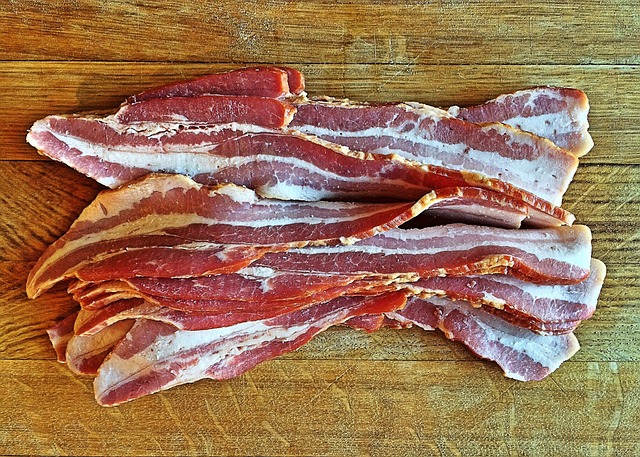
Bacon is not toxic to dogs. The popular framing — “bacon will kill your dog” — misrepresents the evidence. But the equally common dismissal — “a bit of bacon is fine” — misses what actually warrants attention. The honest calibration is this: a strip or two at the breakfast table is not an acute emergency for a healthy adult dog; a dog that accessed the whole packet or the bacon grease pan is in a materially different situation, particularly if the dog is a breed with documented pancreatitis risk.
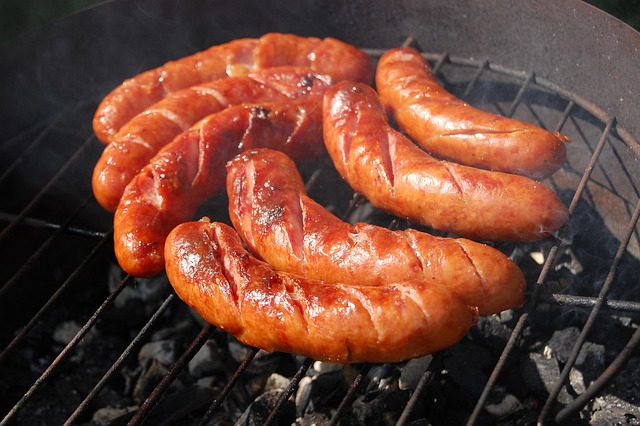
For the broader processed-meat picture, see the sister pages: pork, ham, sausages, hot dogs.
The three concerns associated with bacon rank differently from the way they’re usually presented:
- Fat — the lead concern. Bacon is approximately 68% of calories from fat. A high-fat meal is a genuine pancreatitis trigger, and this is the concern that warrants actual attention — particularly in at-risk breeds.
- Sodium — real, but lower-stakes than most guides imply. A medium strip contains approximately 185–210 mg of sodium. The per-strip figure is a small fraction of any clinically relevant threshold.
- Nitrates and nitrites — not the concern the internet says they are for dogs. The popular claim is based on a category error: the veterinary nitrate concern applies primarily to ruminants, not monogastric animals like dogs.
Fat and Pancreatitis — the Lead Concern
Fat is the concern that should lead any honest bacon guide.
What pancreatitis is: The pancreas produces digestive enzymes. In pancreatitis, those enzymes activate prematurely within the pancreas itself, causing inflammation and, in severe cases, tissue damage. A sudden high-fat meal is one of the most commonly identified triggers in dogs.
The severity range: Most pancreatitis cases are manageable with prompt veterinary care — fluid support, temporary dietary restriction, and monitoring. Severe acute pancreatitis is a serious condition and can be life-threatening, particularly in at-risk breeds. It is not uniformly a death sentence, but it is not “just a stomach upset” either.
Breed predisposition: Veterinary sources are not fully unanimous here. VCA’s pancreatitis page states no breed predisposition, while the AKC, PetMD, and other sources name multiple at-risk breeds. The consensus, and the practical guidance, follows the named-breeds position: Miniature Schnauzers carry the highest documented risk — approximately 4.5× higher prevalence than the general dog population, linked to a tendency toward hypertriglyceridemia (elevated blood triglycerides; up to 30% of the breed is affected). Other breeds named across multiple sources as elevated-risk: English and American Cocker Spaniels, Cavalier King Charles Spaniels, Dachshunds, Yorkshire Terriers, and various Terrier breeds.
If your dog is one of these breeds, a high-fat meal is a more serious consideration — not a “probably fine” situation.
Per-strip fat picture: A typical cooked bacon strip contains approximately 3–5g of total fat. This is a real concentration, but a single strip is not an enormous absolute fat load for a large healthy dog. The picture changes in two scenarios: a dog that eats a large quantity in a single sitting, and — especially — a dog that accesses bacon grease, which delivers concentrated fat without the meat-based bulk diluting it.
Sodium — Real, But Lower-Stakes Than Most Guides Imply
Standard bacon contains approximately 185–210 mg of sodium per medium cooked strip (thin-cut slices run lower, around 116 mg; thick-cut strips higher, around 270–289 mg).
The Merck threshold: The Merck Veterinary Manual identifies clinical signs of salt toxicosis in dogs at 2–3 g of sodium chloride per kg of body weight — which translates to roughly 800–1,200 mg of elemental sodium per kg. For a 10 lb (4.5 kg) dog, the lower clinical-signs threshold is approximately 3,600–5,400 mg of sodium. A medium strip at ~210 mg represents roughly 4–6% of that lower threshold for a 10 lb dog.
In practice: a 10 lb dog would need to eat approximately 17–30 strips in a single sitting to approach sodium-related clinical concern. That scenario does not happen.
When sodium does matter: Dogs on a vet-prescribed low-sodium diet (cardiac or renal disease) are the population for whom even modest sodium increases require attention. In the large-quantity scenario — the whole packet — sodium compounds the fat load, but fat is almost certainly the more urgent clinical concern. See the salt page for full sodium threshold context.
Nitrates and Nitrites — Not the Concern for Dogs the Internet Says
The claim: cured meats contain sodium nitrate and nitrite; these are carcinogenic; therefore bacon is particularly dangerous for dogs.
The honest read on this is a category error at two levels.
First, the ruminant distinction. The primary veterinary concern about nitrate poisoning involves ruminants — cattle, sheep, and goats — whose gut microbiota convert dietary nitrate to nitrite (which is approximately 10× more toxic than nitrate as an intermediate metabolite). This conversion pathway does not operate the same way in monogastric animals like dogs. The Merck Veterinary Manual’s nitrate/nitrite chapter addresses forage-plant nitrate concentrations for livestock; dogs are not the subject of concern.
Second, the human-cancer extrapolation. The WHO’s 2015 IARC classification of processed meats as Group 1 carcinogens is derived from human epidemiology. There is no equivalent body of canine evidence establishing the same risk at comparable exposures. The AKC’s pork page mentions this WHO classification — accurately — but without the important caveat that it is a human-medicine finding, not a canine toxicology finding.
What this means in practice: Nitrate content in a commercially cured bacon strip is not an established veterinary toxicological concern for dogs. It does not belong in the same category as the fat concern. The nitrate narrative is being transferred from human-health discussions to dog-safety discussions without the evidence base to support it.
Two Scenarios: A Strip or Two vs. Packet or Grease Access
A strip or two — the breakfast-table scenario
A dog that eats a strip or two of bacon — a piece that fell on the floor, a deliberate share, a training treat — is getting a real fat and sodium load, but not an acute emergency in a healthy adult dog. The fat is the concern to monitor for, and the key question is the dog’s baseline health and breed.
No vet call needed for a healthy adult dog at a strip or two. Make water available. Know the pancreatitis signs listed below. Don’t make it a habit — cumulative fat loading over time is a genuine concern even when no single episode is significant.
For at-risk breeds — Miniature Schnauzers especially — be more conservative. A strip of bacon is not a routine safe snack for a breed with documented hypertriglyceridemia.
Packet or grease access — the high-stakes scenario
A dog that accessed a full packet of bacon or drank from a frying pan or stored grease container is in a materially different situation. This represents a meaningful single-meal fat load and a genuine pancreatitis trigger.
Bacon grease specifically: Grease is the fat-concentrated version of the concern. The sodium concentration per volume is actually lower in rendered grease than in the strip (salt stays partly with the meat during cooking), but the fat concentration is extremely high. A tablespoon of bacon grease is primarily fat with no diluting substance. If a dog accessed the frying pan or a stored grease jar: call your vet — particularly if the dog is small, a breed with elevated pancreatitis risk, or has any history of pancreatitis or digestive issues. Do not wait for symptoms.
Raw vs. Cooked Bacon
Raw bacon is not recommended — not because of any bacon-specific toxin, but for the same reasons raw commercial meat generally is not recommended: risk of Salmonella, Listeria, and other bacterial contamination. The historical concern about Trichinella (the pork parasite) is largely historical in the context of modern commercial pork in the US and UK — the CDC reports very few trichinellosis cases per year, almost all from wild game or non-commercial pork. The risk from commercial raw bacon is not zero, but it is not the concern it was in an earlier era of pork production.
Cooked bacon concentrates fat and salt as water renders out. It eliminates the bacterial concern but modestly increases both fat and sodium on a per-gram basis. Given the choice: cooked over raw; and neither over a purpose-formulated treat.
Turkey Bacon and “Uncured” Bacon
Turkey bacon is often perceived as categorically healthier, but the sodium and fat picture is similar across most commercial products. Some turkey bacon runs comparable sodium per strip to pork bacon; others are modestly lower. It is a lighter option in degree, not a different risk category.
“Uncured” bacon is largely a labelling artifact. Products marketed as uncured typically use celery powder or celery juice as the curing agent — celery is naturally high in nitrates, and the biochemical curing process is essentially identical to that of conventionally cured bacon. USDA labelling rules permit the “uncured” designation when no directly added sodium nitrate or nitrite is used, even when the celery-derived nitrates accomplish the same function. “Uncured” does not mean meaningfully lower in nitrates; it means the nitrates came from celery. The fat and sodium profile is comparable to standard bacon. It is not a meaningfully safer option for dogs.
Healthier Meat-Treat Alternatives
Recommended substitute
Stewart Pro-Treat Freeze-Dried Beef Liver
A single-ingredient option — just beef liver, no additives, salt, or preservatives — that delivers the high-value, meaty reward dogs respond to without bacon's cumulative fat and sodium concerns.
View on Amazon →Symptoms to Watch For
Pancreatitis — the primary concern:
Onset typically within 24–72 hours of a significant high-fat meal. Watch for:
- Hunched posture or “praying position” (front end lowered, rear elevated) — characteristic of abdominal pain
- Repeated vomiting
- Lethargy, reduced appetite
- Abdominal pain or distension
- Diarrhoea
- Fever
- Dehydration
Persistent or severe vomiting, signs of significant pain, or collapse: contact your vet promptly. Do not wait to see if it resolves.
From sodium — at large quantities only:
- Excessive thirst and urination
- Vomiting, diarrhoea
- Lethargy, muscle weakness or tremors in more serious cases
At strip-or-two quantities, sodium symptoms are not a realistic expectation.
For preparedness
ARCA Pet First Aid Kit
Most bacon-related incidents in healthy dogs resolve without veterinary intervention — but for households where pet emergencies are infrequent enough that response time matters, having a first aid kit on hand is a small investment in preparedness. It bridges the gap between an incident and getting to your vet: wound care, bandaging, and reference for situations that don't require an emergency clinic but do require immediate response.
View on Amazon →What To Do
Dog ate a strip or two of cooked bacon: Low-to-moderate concern for a healthy adult dog. Monitor for pancreatitis signs over the following 24–72 hours. Make water available. No vet call needed unless symptoms develop, the dog is a breed with elevated pancreatitis risk, or it has a history of digestive issues.
Dog ate a large quantity (the whole packet): A meaningful fat and sodium load. Call your vet — particularly for a small dog, a breed with elevated pancreatitis risk, or any dog with prior pancreatitis or digestive history. Don’t wait for symptoms.
Dog accessed bacon grease (pan or jar): Call your vet. Grease is a concentrated fat load; this is the highest-risk bacon scenario for pancreatitis. A small lick is lower concern than a dog that drank significantly from the pan.
Bacon fed regularly: Stop it. Cumulative fat loading is a real concern even when no individual episode triggers an acute event.
Dog on a low-sodium vet diet: Bacon is not appropriate even in small amounts. Discuss with your vet before introducing any high-sodium food.
Frequently Asked Questions
This FAQ summarises general veterinary guidance. It’s informational only and not a substitute for advice from your own vet, who knows your dog.
Is bacon toxic to dogs?
No — bacon is not toxic in the way that xylitol or allium compounds are. There is no acute toxin in bacon that causes immediate harm in small quantities. The concern is nutritional: fat is a pancreatitis trigger, and large quantities add a sodium load. “Not toxic” does not mean “safe to give freely.”
My dog stole a strip of bacon off the counter — should I be worried?
For a healthy adult dog of medium or large size: low concern. Monitor for pancreatitis signs (vomiting, lethargy, hunched posture) over the next day or two. No vet call needed unless symptoms develop or your dog is a breed with documented pancreatitis predisposition.
Is turkey bacon safer for dogs?
By degree, possibly — some turkey bacon products are modestly lower in fat. But the risk profile is similar, and sodium is often comparable to pork bacon. It is not a categorically different food from a safety standpoint.
What about “uncured” or nitrate-free bacon?
“Uncured” is a labelling convention, not a meaningful safety distinction. These products typically use celery-derived nitrates and are not materially different from conventionally cured bacon in their curing chemistry. The fat and sodium profile is comparable.
Is the fat or the sodium more dangerous?
Fat, for most dogs in most scenarios. The pancreatitis risk from a high-fat meal — particularly in susceptible breeds — is more clinically significant than the sodium load from a realistic bacon exposure. Sodium matters at scale; fat matters at smaller quantities for at-risk dogs.
Is there any way to feed bacon safely?
Not as a regular food or condiment. The fat load that creates pancreatitis risk is inherent to bacon, not something that changes with preparation method. If you want to give a savoury meat treat, single-ingredient freeze-dried treats (see above) are the better option.
For Further Reading
For further reading
The Forever Dog by Rodney Habib and Karen Becker
A well-regarded reference covering canine nutrition, health, and longevity — for dog owners interested in a deeper look at the choices behind their dog's diet and lifestyle.
View on Amazon →About This Guide
This guide was researched and written by Claire Donnelly for Is It Safe For My Dog?. We are not veterinarians. Each guide is compiled from published, publicly accessible veterinary and toxicology sources — for this page, VCA Hospitals, the Merck Veterinary Manual, the ASPCA, and the American Kennel Club — and cross-checked before publication. This is general information to help you understand the risk; it does not replace a consultation with your vet.
Sources for the figures on this page
- VCA Hospitals — Pancreatitis in Dogs (clinical signs: vomiting, nausea, fever, lethargy, abdominal pain, diarrhoea, decreased appetite; “praying position” characteristic of abdominal pain; fatty meal named as a trigger; outlier position noted — VCA states no breed predisposition, contrasting with other sources; applied here as the primary clinical-signs reference)
- Merck Veterinary Manual — Salt Toxicosis in Animals (clinical signs threshold: 2–3 g NaCl/kg body weight; acute oral lethal dose approximately 4 g NaCl/kg for dogs; NaCl is approximately 39% sodium by weight; applied here to calibrate per-strip sodium against the clinical threshold and establish that typical quantities represent a small fraction of the toxic range)
- ASPCA Animal Poison Control — People Foods to Avoid Feeding Your Pets (“excessive salt intake can produce increased thirst and urination and sometimes abnormal electrolytes in the blood”; fatty foods associated with vomiting, diarrhoea, and potential pancreatitis in some pets; applied here for the salt and fat/pancreatitis framework)
- American Kennel Club — Can Dogs Eat Pork? (“bacon is an incredibly rich and fatty food with a high salt content”; “eating a large amount can cause pancreatitis, which can be fatal”; WHO 2015 IARC processed-meat classification noted; applied here as the primary bacon-specific narrative source, with breed predisposition and severity calibration added from VCA and PetMD)
- Sodium per strip — approximately 185–210 mg for a typical medium cooked strip; range 116–289 mg across thin and thick-cut products; based on USDA FoodData Central data as compiled across multiple product and nutritional reviews; no single manufacturer URL confirmed at time of writing
- Miniature Schnauzer breed data — approximately 4.5× higher pancreatitis prevalence; hypertriglyceridemia in up to 30% of the breed; drawn from UFAW breed-health documentation and referenced across AKC and PetMD breed-specific content; specific primary study not confirmed at URL level at time of writing
This page is informational only and does not constitute veterinary or medical advice.