Are Chili Peppers Safe for Dogs?
Veterinary pet-care sources including the American Kennel Club and PetMD describe chili peppers as non-toxic to dogs. They are not listed among foods that cause poisoning or systemic toxicity.
However, chili peppers are consistently placed in a caution category. Veterinary literature focuses on the irritating effects of spicy compounds rather than on toxic substances. Dogs are noted to be particularly sensitive to spicy foods.
Across authoritative references, chili peppers are discussed as unsuitable due to their effects on the digestive system.
Why Chili Peppers Can Be a Problem for Some Dogs
Main compounds of concern
- Capsaicin, the compound responsible for heat in chili peppers, which veterinary sources associate with oral, gastrointestinal, and skin irritation.
Portion size and dog size
Veterinary articles note that even small amounts may cause discomfort, and sensitivity varies between individual dogs.
Preparation differences
Veterinary sources distinguish between raw chili peppers, dried chili flakes, and cooked chili-based foods, all of which contain capsaicin and raise similar concerns.
Signs Reported When Dogs React Poorly to Chili Peppers
Veterinary sources commonly associate exposure to spicy foods with:
- Drooling
- Vomiting
- Diarrhoea
- Pawing at the mouth or face
More serious signs
- Persistent gastrointestinal irritation
- Signs of significant oral discomfort
Ingredients or Additives to Watch For
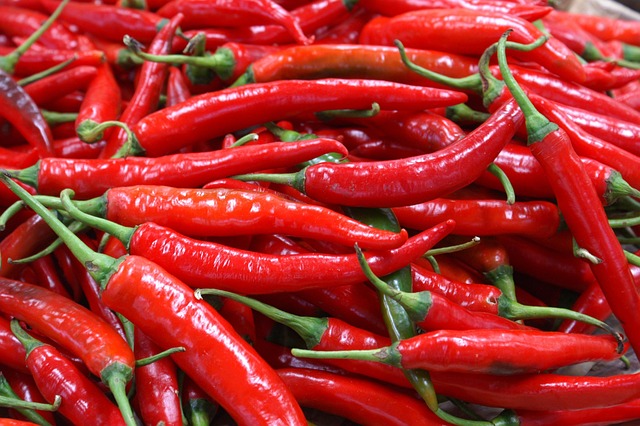
- ❌ Capsaicin-rich peppers (including jalapeños, habaneros, and other hot varieties)
- ❌ Chili powders or flakes (often more concentrated)
- ⚠️ Chili-based sauces (frequently contain garlic, onion, salt, or other unsuitable ingredients)
Puppies vs. Adult Dogs
Veterinary sources indicate that puppies may be more sensitive to irritating foods. Capsaicin-related discomfort is described as relevant to dogs of all ages.
Other Common Variants of Chili Peppers
Fresh Chili Peppers
Veterinary references describe fresh chili peppers as irritating due to capsaicin content.
Dried Chili Peppers or Powder
Veterinary sources note that dried forms are often more concentrated and associated with stronger reactions.
Chili-Containing Foods
Veterinary literature highlights that prepared foods containing chili peppers raise additional concerns due to other added ingredients.
Dog-Friendly Alternatives Mentioned in Pet-Nutrition Sources
- Plain carrots
- Green beans
- Plain pumpkin
Frequently Asked Questions (FAQ)
This FAQ summarises themes appearing in veterinary pet-care articles.
It is informational only and not a substitute for professional veterinary care.
Are chili peppers toxic to dogs?
Veterinary sources state that chili peppers are not toxic, but they can cause irritation and discomfort.
Why do chili peppers upset dogs?
Pet-nutrition references explain that capsaicin irritates the digestive tract and mouth in dogs.
Are mild peppers safer than hot peppers?
Veterinary articles note that capsaicin content varies, but irritation is still possible even with milder varieties.
Source Reference
This page compiles information from publicly accessible veterinary and pet-safety resources, including:
-
American Kennel Club (AKC) — “Can Dogs Eat Chili Peppers?”
https://www.akc.org/expert-advice/nutrition/can-dogs-eat-chili-peppers/ -
PetMD — “Can Dogs Eat Chili Peppers?”
https://www.petmd.com/dog/nutrition/can-dogs-eat-chili-peppers
This page is informational only and does not constitute veterinary or medical advice. Readers are encouraged to review the cited sources directly.