Affiliate disclosure: This guide contains affiliate links. If you purchase via these links, we may earn a small commission at no extra cost to you. This never affects our safety assessments — see our Editorial Standards for how we work.
Recommendations on this page
- For preparedness: ARCA Pet First Aid Kit — a small investment for unexpected pet emergencies. View on Amazon →
- Further reading: The Forever Dog by Habib & Becker — a well-regarded reference on canine nutrition and longevity. View on Amazon →
Are Corn Flakes Safe for Dogs?
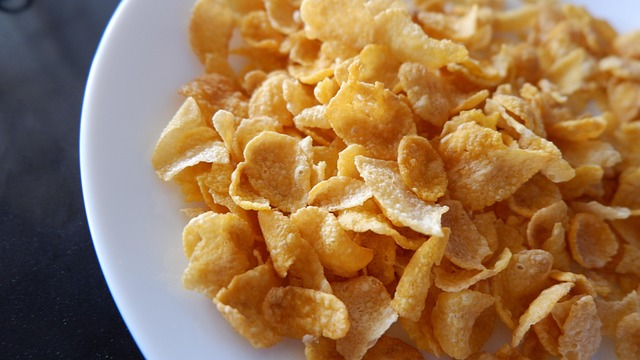
Plain corn flakes aren’t toxic to dogs. They’re a simple corn-based cereal, and corn is a common, accepted ingredient in commercial dog food — so there’s no poison here, and a few plain flakes dropped on the floor or shared from the bowl are a low-risk snack. Not a useful one — corn flakes give a dog nothing it actually needs — but not a dangerous one either.
So the plain version is a gentle, if pointless, treat. This page is a Caution rather than fully safe for the same reasons most processed human cereals are: corn flakes are an unnecessary processed food (empty carbohydrate, with a little added salt), and — the part that actually matters — the sweetened versions carry a lot more sugar than the plain ones. Below: the sugar, the two label-checks that matter more than the flakes, and the milk.
Sugar: Plain vs. Frosted Is the Real Difference
Here’s the distinction that drives the whole page. Plain corn flakes are fairly low in sugar — around 3 g per serving, which is modest. But most of the cereal aisle isn’t plain:
- Frosted Flakes and other sweetened/frosted corn cereals run two to three times that — on the order of 12 g of sugar per serving. That’s the everyday concern: not a poison, but a real load of sugar (empty calories, and the dental and weight considerations that come with it), and more than a dog has any need for.
So the practical line is simple: a few plain corn flakes are a low-concern nibble, while frosted or sweetened ones are a sugar treat to keep small and occasional — the same as any sugary human food. The sugar itself isn’t dangerous in a small amount; it’s just the reason cereal isn’t something to hand a dog by the bowlful. (For the full picture on sugar and dogs — dental, weight, diabetic dogs — see the sugar page.)
The Label-Check That Matters Most: Raisins in the Box
This one isn’t about corn flakes specifically, but it’s genuinely worth a dog owner’s attention in the cereal aisle, so it earns a mention. Plain corn flakes contain no raisins — but plenty of cereals do. Raisin Bran and similar raisin-studded cereals are common, and raisins are genuinely toxic to dogs (they can cause kidney failure, with no reliably safe amount).
So if the cereal your dog got into wasn’t plain corn flakes but a raisin-containing cereal, that changes the picture entirely — the raisins are a real hazard, well beyond anything the flakes themselves pose. It’s more of a bran-and-muesli thing than a corn-flakes thing, but the rule is worth carrying: check whether there are raisins in the box. If there are, and your dog ate a meaningful amount, treat it as a raisin exposure and call your vet — don’t wait.
Corn Flakes with Milk
Corn flakes are usually eaten with milk, and that’s a separate consideration from the cereal. A dog lapping up leftover cereal milk is really a milk question — many dogs are lactose-sensitive and get a bit of GI upset from dairy. It’s usually minor, but if your dog cleans out a milky bowl, that’s the part more likely to cause loose stools than the flakes. See the milk page for the lactose picture (and note that a splash of plant milk is a different, lactose-free story).
Sugar-Free and “Keto” Cereals: a Quick Xylitol Check
Mainstream corn flakes — plain or frosted — are sweetened with ordinary sugar, not xylitol, so this is rarely a concern. But because xylitol is genuinely dangerous to dogs, it’s worth the five-second habit on the newer “keto,” “sugar-free,” or low-carb cereals: read the ingredient list. Most of those use allulose, monk fruit, or stevia rather than xylitol, but the category is newer and more varied, so if you ever see xylitol (or “birch sugar”) on a cereal label, keep it away and treat any ingestion as urgent. For ordinary corn flakes, this is a non-issue — it’s the specialty sugar-free products that warrant the glance.
Symptoms to Watch For
Plain corn flakes rarely cause anything beyond, at most, mild stomach upset from an unfamiliar food. The things to watch for come from the sweeter and mixed-in extras:
- From a large amount, or sweetened/frosted cereal (sugar): loose stools, gas, mild vomiting; over time, the sugar is a weight and dental concern
- From the milk (lactose): loose stools or gas a few hours later, in a lactose-sensitive dog
- From raisin-containing cereal (the serious one): raisins can cause kidney injury — don’t wait for symptoms; call your vet or a pet poison line if a meaningful amount was eaten (see raisins)
- From a xylitol-containing “sugar-free” cereal (rare, but urgent): weakness, wobbliness, collapse within 30–60 minutes — an emergency (see xylitol)
For preparedness
ARCA Pet First Aid Kit
A few plain corn flakes are a non-event — but the cereal scenarios that do matter (a raisin-studded cereal, or a "sugar-free" one with xylitol) are exactly the kind worth being ready for. A first aid kit is a small, sensible bit of preparedness while you get to your vet.
View on Amazon →What To Do
- A few plain corn flakes, healthy dog: low concern. Watch for mild stomach upset if it was more than a little; nothing to do beyond that.
- A bowlful, or sweetened/frosted cereal: expect the sugar to be the issue — mild GI upset, and not something to repeat. Keep sweetened cereal to a rare, tiny amount if at all.
- Raisin-containing cereal: treat it as a raisin exposure — call your vet or a pet poison line, especially if a meaningful amount was eaten.
- A “keto”/sugar-free cereal: check the label for xylitol; if it’s there, treat it as an emergency (see xylitol). Mainstream cereal uses ordinary sugar, so this is a quick check.
- The cereal milk: if your dog drank a milky bowl, the milk is the more likely cause of any loose stools — usually minor.
Frequently Asked Questions
This FAQ summarises general veterinary and nutrition guidance. It’s informational only and not a substitute for advice from your own vet, who knows your dog.
Are corn flakes safe for dogs?
Plain ones, in small amounts, yes — they’re non-toxic, since they’re just a corn-based cereal and corn is fine for dogs. They’re a “caution” rather than fully safe because they’re a processed food with no benefit for a dog and a little added salt, and because the sweetened versions (Frosted Flakes and the like) carry two to three times the sugar. A few plain flakes are harmless; a bowl of frosted cereal is a sugar hit to avoid.
My dog ate Frosted Flakes / sugary cereal — is that a problem?
Not an emergency, but not ideal. The concern is the sugar — sweetened cereals have far more than plain corn flakes, so expect possible mild stomach upset, and know it’s empty calories a dog doesn’t need. A one-time small amount is unlikely to harm a healthy dog; just don’t make sugary cereal a habit, and take extra care with a diabetic or overweight dog. (See the sugar page.)
What if the cereal had raisins in it?
That’s the one to take seriously. Raisins are genuinely toxic to dogs and can cause kidney failure, so a raisin-containing cereal (Raisin Bran and similar) is a different and more serious situation than plain corn flakes. If your dog ate a meaningful amount of a raisin cereal, treat it as a raisin exposure and contact your vet or a pet poison line promptly — don’t wait for symptoms.
Can dogs have corn flakes with milk?
The flakes are fine plain; the milk is the part to think about. Many dogs are lactose-sensitive, so a bowl of cereal milk can cause loose stools or gas — usually mild, but it’s the milk rather than the corn flakes doing it. If you’re going to share a little cereal, plain and dry (or with a splash of dog-safe water) avoids the lactose question entirely. See the milk page.
About This Guide
This guide was researched and written by Claire Donnelly for Is It Safe For My Dog?. We are not veterinarians. Each guide is compiled from published, publicly accessible veterinary and toxicology sources — for this page, the American Kennel Club, PetMD, VCA Hospitals, and the ASPCA — and cross-checked before publication. Because corn flakes are a processed corn cereal rather than a single ingredient, we apply the AKC’s and PetMD’s corn guidance to the base grain and say so openly, with the sugar, raisin, and xylitol concerns covered in depth on our dedicated pages for those. This is general information; it does not replace a consultation with your vet.
Sources for the figures on this page
- American Kennel Club — Can Dogs Eat Corn? (corn non-toxic and commonly used in dog food; the base-grain guidance applied to corn flakes, no AKC corn-flakes-specific page existing)
- PetMD — Can Dogs Eat Corn? (corroborating corn guidance — safe as a plain grain, processed and sweetened forms as the concern)
- VCA Hospitals — Xylitol Toxicity in Dogs (xylitol seriously toxic to dogs; the basis for the label-check on “keto”/sugar-free cereals)
- ASPCA Animal Poison Control — People Foods to Avoid Feeding Your Pets (grapes and raisins listed as toxic — relevant to raisin cereals; general guidance on sugary foods and excess salt)
- Composition figures — plain corn flakes ~3 g sugar per serving versus ~12 g in frosted/sweetened varieties; mainstream corn cereals are cane/malt-sugar sweetened (not xylitol); raisins appear in bran and muesli cereals, not plain corn flakes; from published product and food-composition data
This page is informational only and does not constitute veterinary or medical advice.