Is Marinara Sauce Safe for Dogs?
Not safe as typically prepared — but the calibration matters, and the calibration here is specifically about how much your dog ate.
The hazard is not the tomato. Ripe tomato flesh is non-toxic to dogs; all major veterinary sources agree on this. The AKC states directly that “the tomato sauce on your pizza or spaghetti likely contains additional ingredients like garlic and onions, which can also cause gastrointestinal distress.” Marinara’s risk is entirely its alliums. For the tomato question itself, see the tomatoes and tomato-paste pages.
A lick off a plate is not a crisis for a healthy medium or large dog. The garlic in a smear of marinara is well below the dose associated with acute toxicity at that scale.
A realistic pasta portion is a different matter. A dog that gets into a pasta bowl with a cup or more of sauce takes in a meaningful combined garlic and onion load — roughly 2–4 times the garlic of a single pesto serving, plus onion’s separate but parallel toxic pathway. The combined allium burden is not trivial.
Regular exposure is the real concern. Allium toxicity accumulates. A dog given pasta leftovers with marinara twice a week absorbs a regular allium load whose effects compound below the threshold for any single obvious incident. Chronic haemolytic anaemia from cumulative allium exposure can develop without any one meal being identifiable as the cause.
The Hazard: Garlic and Onion
Garlic and onion are allium-family toxins. Their mechanism — oxidative damage to red blood cells, Heinz body formation, haemolytic anaemia — is the same hazard covered in detail on the pesto page, which has the full explanation: dose thresholds, breed sensitivity, the delayed-onset picture, and what acute toxicity looks like. The marinara page won’t repeat all of that. The key facts in brief:
- All forms retain full toxicity. Cooked, dried, dehydrated, powdered — all equally dangerous. The cooking that produces marinara does not neutralise garlic or onion.
- Onset is delayed. Clinical signs typically appear 3–5 days after significant allium ingestion. A dog that seems fine the evening it ate a pasta dish is not necessarily out of danger.
- Garlic is more potent than onion. The Merck Veterinary Manual gives garlic as 3–5× more toxic per gram than onion (toxic dose for onion: 15–30 g/kg body weight). VCA Hospitals notes that garlic powder is especially concentrated — one teaspoon equals roughly eight fresh cloves.
- The damage is cumulative. Each allium exposure adds to the oxidative burden on red blood cells from prior exposures.
If your dog ate a significant amount of marinara, see the garlic, garlic powder, or onions pages for the full hazard picture, then contact your vet.
Per-Serving vs. Per-Meal: Why Portion Size Is the Variable That Matters
Per tablespoon, marinara runs comparable to pesto in garlic density. Typical recipes use 2–4 garlic cloves per 24-ounce batch — across five or six half-cup servings, that’s roughly 1–3g of fresh garlic equivalent per half-cup serving. That’s in the same range as a 2-tablespoon pesto serving.
But pesto is consumed in 2-tablespoon portions. Marinara is a pasta sauce. The difference isn’t in the garlic density per tablespoon; it’s in how much sauce ends up in the bowl. At one to two cups — a realistic pasta portion — the garlic load is 2–4× a pesto serving, plus the additional onion that most marinara recipes include.
For a 10 lb (4.5 kg) dog: a large serving of marinara can represent a meaningful fraction of the acute onion threshold in a single meal, and garlic’s lower threshold compounds this further. Small dogs should be taken seriously here even at moderate portion sizes.
For a medium or large dog (20 lb / 9 kg+): a single large serving is unlikely to cause acute crisis, but the dose is not negligible — and if marinara is a regular addition to the dog’s meals, the cumulative picture is a genuine concern.
What’s in Commercial Marinara
Prego Traditional Italian Sauce (confirmed via manufacturer’s site):
- Serving: ½ cup (120mL) | Sodium: 470mg per serving
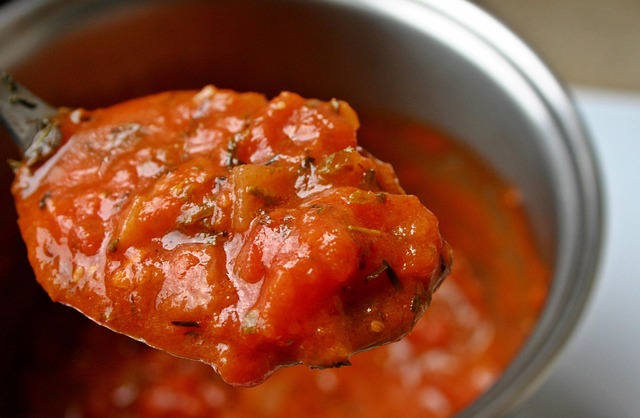
- Ingredients: Tomato Puree (Water, Tomato Paste), Diced Tomatoes in Tomato Juice, Sugar, Contains Less Than 1% Of: Salt, Canola Oil, Dried Onions, Dried Garlic, Spices, Basil, Citric Acid, Onion Extract, Garlic Extract
This is representative of the mainstream commercial marinara category. Both garlic and onion appear in two forms — dried and extract — meaning both are present in concentrated form within the same product. The sodium at 470mg per half-cup is also substantial; for context on what meaningfully high sodium intake looks like for dogs, see the salt page.
Most major commercial marinara brands name their alliums explicitly in the ingredient list — garlic, onion, garlic powder, onion powder appear by name rather than being hidden under “natural flavors.” This makes marinara more transparent to read than, say, commercial chicken broth, where “natural flavors” is the main pitfall. Still: read the full ingredient list. Garlic and onion appearing anywhere in any form means the allium concern applies.
Homemade Marinara: The Commercial vs. Traditional Split
Homemade marinara is more variable — and the variation is meaningful.
Traditional Neapolitan marinara is garlic-only: tomatoes, garlic, olive oil, basil, oregano. No onion. The garlic quantity is under the cook’s control. A homemade version with modest garlic carries a lower total allium load than American-style commercial marinara.
American-style homemade marinara typically adds onion — often half to a whole onion per batch — alongside garlic. This matches or exceeds what most commercial jars deliver on combined allium content.
A home cook making sauce for a household that includes a dog can produce an allium-free version (no garlic, no onion) that poses no toxicological risk. That’s the only homemade version genuinely safe to share.
Symptoms to Watch For
Allium exposure — haematological, delayed:
- Onset typically 3–5 days after ingestion; dog may appear normal initially
- Lethargy, weakness, reduced appetite
- Pale, white, or yellowish gums
- Rapid heart rate, laboured breathing
- Dark or reddish-brown urine
Sodium from large quantities of commercial sauce:
- Increased thirst and urination
- Vomiting, diarrhoea
- In serious cases: lethargy, tremors, electrolyte disturbance
See the garlic or onions pages for the full clinical picture.
What To Do If Your Dog Ate Marinara Sauce
A lick off the floor or a spoon: Low concern for a healthy medium or large dog. Make water available, note it happened, and watch for symptoms over the following week.
A small amount as an ingredient in a shared meal: For a medium or large dog, the allium load remains relatively low. Monitor for the symptoms above over the following week. If your dog is small (under 10 lb), a puppy, or already anaemic — call your vet.
A significant portion — a bowl of pasta with sauce, or the contents of a dish: Call your vet. The combined garlic and onion from a large serving is a real allium exposure, and delayed onset means waiting for symptoms is not a safe strategy. Early intervention gives the best outcomes.
Regular exposure — pasta leftovers, sauce scraped from a plate as a habit: Stop the habit and mention cumulative allium exposure at your next vet visit. Chronic anaemia from repeated small exposures can develop without any individual incident appearing harmful.
Frequently Asked Questions
This FAQ summarises general veterinary guidance. It’s informational only and not a substitute for advice from your own vet, who knows your dog.
My dog ate pasta with marinara — what should I do?
Estimate how much sauce your dog consumed. A small taste from the plate: low concern for a medium or large dog; watch for symptoms over the following week. A full portion of pasta or more: call your vet. Allium toxicosis has a 3–5 day delayed onset — symptoms not appearing the same day is not reassurance.
Is marinara dangerous because of the tomatoes?
No. The AKC confirms that ripe tomato flesh is not toxic to dogs, and it specifically flags the garlic and onion in pasta and pizza sauces as the concern. See the tomatoes page for the full picture on tomatoes themselves.
Does cooking marinara make it safe for dogs?
No. The Merck Veterinary Manual and VCA Hospitals both confirm that cooking does not neutralise allium toxicity. Simmered, roasted, dried, or dehydrated garlic and onion retain their toxic properties.
Is homemade marinara safer than jarred?
Depends entirely on what’s in it. A traditional Neapolitan-style marinara with modest garlic and no onion delivers a lower allium load than a commercial jar. A home cook can make a version with no alliums at all, which poses no toxicological risk. American-style homemade marinara with garlic and onion carries the same concerns as commercial equivalents.
Can dogs eat pasta with plain tomato sauce — no garlic, no onion?
Plain tomato sauce from ripe tomatoes, olive oil, and herbs with no alliums is not a toxicological hazard. The problem is that almost no commercially available pasta sauce fits that description, and most homemade recipes include at least garlic. The sauce’s ingredient list is what matters, not the tomato base.
About This Guide
This guide was researched and written by Claire Donnelly for Is It Safe For My Dog?. We are not veterinarians. Each guide is compiled from published, publicly accessible veterinary and toxicology sources — for this page, the Merck Veterinary Manual, the ASPCA, the American Kennel Club, and VCA Hospitals — and cross-checked before publication. This is general information to help you understand the risk; it does not replace a consultation with your vet.
Sources for the figures on this page
- Merck Veterinary Manual — Garlic and Onion (Allium spp.) Toxicosis in Animals (toxic dose: onion 15–30 g/kg body weight; garlic 3–5× more potent; all forms — raw, cooked, dehydrated, granulated — retain full toxicity; onset 3–5 days after exposure; mechanism: oxidative RBC damage, Heinz body formation, haemolytic anaemia)
- ASPCA — People Foods to Avoid Feeding Your Pets (garlic and onion: allium toxins; cause GI irritation and red blood cell damage leading to anaemia)
- American Kennel Club — Can Dogs Eat Tomatoes? (direct statement: “the tomato sauce on your pizza or spaghetti likely contains additional ingredients like garlic and onions, which can also cause gastrointestinal distress”; ripe tomato flesh non-toxic to dogs)
- VCA Hospitals — Onion, Garlic, Chive, and Leek Toxicity in Dogs (all forms toxic: dried, powdered, liquid, cooked, raw; garlic powder potency: 1 tsp powder = 8 fresh cloves; oxidative RBC damage mechanism)
- Product evidence — Prego Traditional Italian Sauce: 470mg sodium per ½-cup serving; ingredients confirmed to include Dried Onions, Dried Garlic, Onion Extract, and Garlic Extract (confirmed via manufacturer’s site)
This page is informational only and does not constitute veterinary or medical advice.