Affiliate disclosure: This guide contains affiliate links. If you purchase via these links, we may earn a small commission at no extra cost to you. This never affects our safety assessments — see our Editorial Standards for how we work.
Recommendations on this page
- For a dog-safe choice: Crazy Richard's 100% Peanuts — a single-ingredient peanut butter (just peanuts, no sweeteners, salt, or oil) with no xylitol risk. View on Amazon →
- For preparedness: ARCA Pet First Aid Kit — a small investment for unexpected pet emergencies. View on Amazon →
- Further reading: The Forever Dog by Habib & Becker — a well-regarded reference on canine nutrition and longevity. View on Amazon →
Is Peanut Butter Safe for Dogs?
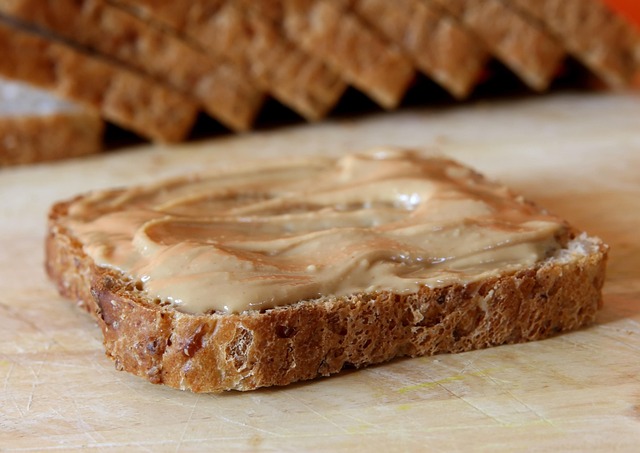
For most peanut butter, yes — and it is one of the genuinely useful foods to have on hand for a dog. Plain peanut butter is a reliable way to hide a pill, the standard stuffing for a Kong or other enrichment toy, and a high-value occasional treat that most dogs love. The AKC confirms the everyday case directly: ordinary peanut butter is safe for dogs.
So this page is not a “peanut butter is dangerous” warning. It is the opposite of a binary. The honest calibration is this:
- Standard peanut butter is fine. Plain peanut — with or without salt — carries no toxin and a long track record of safe use.
- Xylitol-sweetened peanut butter is a genuine veterinary emergency. A minority of specialty products use the sugar substitute xylitol, which is acutely toxic to dogs at very small doses.
The entire practical task is telling the two apart. That comes down to one question — does this jar contain xylitol? — and one trap, which is that the word “natural” on a label tells you nothing about the answer. The rest of this page is the dose math that explains why xylitol matters so much, and the label-reading that lets you answer the question with confidence.
For the whole-nut picture, see the peanuts page.
The One Real Danger: Xylitol
Xylitol is a sugar alcohol used as a sugar substitute in sugar-free gum, mints, some baked goods and dental products — and, relevant here, in a handful of “sugar-free,” “keto,” and high-protein peanut butters.
In humans it is harmless. In dogs it is not, and the mechanism is specific. VCA Hospitals explains that xylitol causes a rapid, dose-dependent release of insulin in dogs. That insulin surge drives blood sugar down hard and fast, producing hypoglycaemia that can become life-threatening. At higher doses, xylitol can also cause acute liver failure through a mechanism that is not fully understood. The Pet Poison Helpline notes that hypoglycaemia can set in as quickly as 10–15 minutes after ingestion.
This is why xylitol is treated as an emergency rather than a “monitor at home” situation: the onset is fast, the dose required is small, and the consequences — seizures, collapse, liver damage — are severe. There is no safe amount of xylitol for a dog.
How Much Xylitol Is Dangerous? The Dose Math
This is the part worth understanding, because it explains why even a small amount matters.
The Merck Veterinary Manual gives two dose thresholds for dogs:
- Hypoglycaemia: more than ~100 mg/kg of body weight (about 45 mg per pound).
- Liver failure: more than ~500 mg/kg of body weight (about 227 mg per pound).
Applied to a range of dog sizes, those thresholds translate to strikingly small absolute amounts of xylitol:
| Dog weight | Hypoglycaemia risk above (~100 mg/kg) | Liver-failure risk above (~500 mg/kg) |
|---|---|---|
| 10 lb (4.5 kg) | ~0.45 g xylitol | ~2.27 g xylitol |
| 20 lb (9.1 kg) | ~0.9 g | ~4.5 g |
| 30 lb (13.6 kg) | ~1.36 g | ~6.8 g |
| 50 lb (22.7 kg) | ~2.27 g | ~11.3 g |
For a sense of scale: a 10 lb dog can reach the hypoglycaemia threshold on under half a gram of xylitol — far less than the weight of a single stick of sugar-free gum. (The 30 lb figures above — roughly 1.4 g for hypoglycaemia, 6.8 g for liver injury — match the worked example published by North Carolina State University’s veterinary college, an independent cross-check on the arithmetic.)
One honest caveat, and it matters. It would be convenient to tell you “X tablespoons of brand Y is the toxic dose,” but that number does not exist — and the reason is important. Xylitol-sweetened peanut butters list xylitol in the ingredients but do not disclose how many milligrams it contains per serving, and the Pet Poison Helpline notes that xylitol content varies widely from product to product. So the following is illustrative, not a precise calculation: because the threshold for a 10 lb dog is under half a gram, it is entirely plausible that a single tablespoon of a xylitol-sweetened spread could cross it. We cannot put a firm number on any specific brand — precisely because the manufacturers don’t publish one. The practical takeaway is the same either way: for a xylitol product, treat any amount as potentially dangerous and don’t try to reason about “how much.”
Which Peanut Butter Brands Contain Xylitol?
Xylitol in peanut butter is a feature of specialty “functional” products — high-protein, low-carb, keto, and sugar-free spreads — not of the mainstream aisle.
As of June 2026, the following brands list xylitol (sometimes under the name “birch sugar”) on the ingredient labels of at least some of their products:
- Nuts ‘N More
- Go Nuts, Co.
- Krush Nutrition
- P28 Foods
- No Cow (formerly D’s Naturals)
Brand formulations change — this list is a snapshot, not a guarantee. A product that contained xylitol last year may be reformulated without it, and a product that was previously xylitol-free may add it. Manufacturers also vary the recipe between flavours within the same brand. This list reflects what we confirmed in June 2026; it is not a substitute for reading the current label on the jar in your hand, every time. The label is always more authoritative than any list — including this one.
How to Read the Label
This is the skill that actually keeps a dog safe. It takes ten seconds and it works regardless of brand or marketing.
Scan the ingredient list for xylitol — under any of its names:
- Xylitol
- Birch sugar (the most common alias, and the easiest to miss)
- Birch bark extract, wood sugar
- “Sugar alcohol” or a vague “natural sweetener” with no further detail
Treat these product categories as higher-risk — they are where xylitol clusters: anything marked sugar-free, no sugar added, low-carb, keto, or high-protein / “fitness” / diet peanut butter.
The trap to internalise: “natural” does not mean “xylitol-free.” Xylitol is marketed as a natural sweetener (it can be derived from birch), and several xylitol-containing nut butters describe themselves as “all natural.” Nuts ‘N More, for example, lists its sweetener as “natural sweetener (xylitol).” The word “natural” on the front of the jar tells you nothing about whether xylitol is inside — only the ingredient list does.
The reassuring part: mainstream peanut butters are not the risk cluster. Standard supermarket brands such as Jif, Skippy, and Peter Pan, store-brand peanut butters, and simple “natural” butters whose only ingredients are peanuts (and perhaps salt) do not contain xylitol. The danger lives in the specialty/fitness section, not the ordinary one. When in doubt, the simplest jars — just peanuts — are the safest.
Dog-safe choice
Crazy Richard's 100% Peanuts
When the goal is a peanut butter you never have to second-guess, the simplest label is the safest one. Crazy Richard's has a single ingredient — peanuts — with no xylitol, no added sugar, no salt, and no oils. It removes the label-reading uncertainty entirely: there is nothing in the jar but the nut, which makes it a reliable choice for pill-hiding, stuffing toys, or an occasional treat.
View on Amazon →The Other Concerns — Real, but Not Emergencies
Once xylitol is ruled out, the remaining considerations with standard peanut butter are matters of moderation, not toxicity.
- Fat and pancreatitis. Peanut butter is rich in fat. The AKC notes that too much can contribute to obesity and, in susceptible dogs, pancreatitis. This is a quantity-and-frequency concern, not a reason to avoid it entirely.
- Calories. Peanut butter is calorie-dense. The AKC’s “10 percent rule” is the useful guide: treats — peanut butter included — should make up no more than 10% of a dog’s daily calories.
- Sodium. Salted peanut butters add sodium; unsalted or single-ingredient versions avoid it. Worth noting for dogs on a vet-prescribed low-sodium diet — see the salt page.
- Added sugar. Some conventional butters add sugar; it is not toxic in the way xylitol is, but it adds empty calories. Plain or natural butters avoid it.
None of these change the headline: a spoonful of plain peanut butter is a fine treat for most dogs. They are reasons to keep it occasional, not reasons for alarm.
Symptoms to Watch For
Xylitol ingestion — a veterinary emergency. Do not wait for symptoms; if you know or suspect a dog ate xylitol, call your vet immediately.
Hypoglycaemia signs — onset can be within 30 minutes (sometimes as fast as 10–15 minutes), and may be delayed up to 12–18 hours if absorption is slowed:
- Weakness, lethargy, unsteadiness or stumbling (ataxia)
- Vomiting
- Trembling or tremors
- Collapse
- Seizures
Liver-injury signs — may not appear until 24–48 hours after ingestion:
- Worsening lethargy and weakness
- Vomiting, reduced appetite
- Yellowing of the gums, eyes, or skin (jaundice)
If a dog has eaten any peanut butter or other product containing xylitol, this is time-critical. Call your vet or an animal poison line right away — do not wait to see whether signs develop.
Standard (xylitol-free) peanut butter — not an emergency:
- Mild GI upset from the fat — vomiting, loose stools, gas — usually only after a large quantity
- These are self-limiting in a healthy dog
For preparedness
ARCA Pet First Aid Kit
For households where pet emergencies are infrequent enough that response time matters, a first aid kit on hand is a small investment in preparedness — wound care, bandaging, and a reference for situations that don't require an emergency clinic but do require immediate response.
View on Amazon →What To Do
You know or suspect the peanut butter contained xylitol: This is an emergency. Call your vet or an emergency animal hospital now — in the US, the Pet Poison Helpline is (855) 764-7661 (a per-incident fee of around $89 applies). Note your dog’s weight, the product, and roughly how much was eaten. Do not wait for symptoms, and do not induce vomiting unless a vet specifically instructs you to. Early treatment, while the dog is still clinically normal, produces the best outcomes.
Your dog ate standard, xylitol-free peanut butter: Low concern. A normal treat-sized amount is fine. After a large quantity, watch for GI upset (vomiting, loose stools) from the fat over the next several hours, and make water available. A vet call is only warranted if your dog is very small, has a history of pancreatitis, or develops persistent symptoms.
You’re not sure whether it had xylitol: Find the jar and read the ingredient list. If xylitol or “birch sugar” appears — or if you genuinely can’t determine the product — call your vet and treat it as a possible xylitol exposure. With xylitol, erring toward the call is the right instinct.
Frequently Asked Questions
This FAQ summarises general veterinary guidance. It’s informational only and not a substitute for advice from your own vet, who knows your dog.
Is peanut butter safe for dogs?
For standard peanut butter, yes — it’s safe and useful in moderation. The single thing that makes any peanut butter dangerous is xylitol, a sugar substitute used in a minority of specialty products. Check the ingredient list; if there’s no xylitol, plain peanut butter is a fine occasional treat.
Why do people say peanut butter is dangerous for dogs?
Because some peanut butter is — the ones containing xylitol. The warning is real but it has been generalised into a blanket “peanut butter is risky” message that overshoots. The accurate version is narrower and more useful: standard peanut butter is fine; xylitol-sweetened peanut butter is an emergency. The danger is a specific ingredient in a specific subset of products, not peanut butter itself.
How can I tell if my peanut butter has xylitol?
Read the full ingredient list. Look for “xylitol” and its most common alias, “birch sugar” — also wood sugar, sugar alcohol, or a vague “natural sweetener.” Be especially careful with anything labelled sugar-free, no-sugar-added, low-carb, keto, or high-protein. And don’t rely on the word “natural” on the front — it does not mean xylitol-free.
Is “natural” peanut butter automatically safe?
No. “Natural” is a marketing term, not a safety guarantee. Some xylitol-containing nut butters are marketed as all-natural, because xylitol can be derived from birch. The only reliable check is the ingredient list. That said, the simplest natural butters — those whose only ingredient is peanuts — are an excellent, low-risk choice precisely because there’s nothing else in them.
My dog ate a normal spoonful of Jif (or Skippy) — should I worry?
No. Mainstream supermarket peanut butters do not contain xylitol. A treat-sized spoonful of standard peanut butter is fine for most dogs; at most you might see mild stomach upset if your dog is sensitive or ate a lot. Keep it occasional, within the 10% treat rule.
Can puppies have peanut butter?
A small amount of plain, xylitol-free peanut butter is generally fine for puppies, but the same cautions apply more sharply: their smaller size means the fat and calories add up faster, and the xylitol threshold is lower in absolute terms. Use it sparingly, and only confirmed xylitol-free.
For further reading
The Forever Dog by Rodney Habib and Karen Becker
A well-regarded reference covering canine nutrition, health, and longevity — for dog owners interested in a deeper look at the choices behind their dog's diet and lifestyle.
View on Amazon →About This Guide
This guide was researched and written by Claire Donnelly for Is It Safe For My Dog?. We are not veterinarians. Each guide is compiled from published, publicly accessible veterinary and toxicology sources — for this page, the Merck Veterinary Manual, the Pet Poison Helpline, VCA Hospitals, the American Kennel Club, and the ASPCA — and cross-checked before publication. This is general information to help you understand the risk; it does not replace a consultation with your vet.
Sources for the figures on this page
- Merck Veterinary Manual — Xylitol Toxicosis in Dogs (dose thresholds: hypoglycaemia >100 mg/kg ≈ 45 mg/lb; hepatic failure >500 mg/kg ≈ 227 mg/lb; onset within 30 minutes or delayed 12–18 hours; liver signs may not appear until 24–48 hours; mechanism: dose-dependent insulin release; applied here as the basis for the per-body-weight dose table)
- Pet Poison Helpline — Xylitol (hypoglycaemia onset as fast as 10–15 minutes; xylitol content “varies widely” between products, with no per-serving disclosure — the basis for the illustrative-not-precise framing in the dose section)
- VCA Hospitals — Xylitol Toxicity in Dogs (mechanism: rapid, dose-dependent insulin release causing profound hypoglycaemia; clinical signs: weakness, vomiting, ataxia, collapse, seizures; risk of liver failure at higher doses)
- American Kennel Club — Can Dogs Eat Peanut Butter? (standard peanut butter safe for dogs; xylitol identified as the toxic exception; the “10 percent rule” for treats; fat content linked to obesity and pancreatitis; unsalted/homemade options preferred)
- ASPCA — People Foods to Avoid Feeding Your Pets (xylitol identified among the sweeteners toxic to pets; high-fat foods associated with GI upset and pancreatitis)
- Dose-math cross-check — North Carolina State University College of Veterinary Medicine (publicly states ~1.37 g xylitol risks hypoglycaemia and ~6.8 g risks liver destruction in a 30 lb dog; consistent with the Merck thresholds applied here; cited as corroboration, not as a primary source)
- Brand list — products listing xylitol or “birch sugar” on at least some ingredient labels as of June 2026 (Nuts ‘N More, Go Nuts Co., Krush Nutrition, P28 Foods, No Cow); confirmed via current retail product listings; formulations change and were not re-verified against a single manufacturer URL at time of writing
This page is informational only and does not constitute veterinary or medical advice. If your dog has eaten peanut butter containing xylitol, contact your vet or an emergency animal poison service immediately.