Affiliate disclosure: This guide contains affiliate links. If you purchase via these links, we may earn a small commission at no extra cost to you. This never affects our safety assessments — see our Editorial Standards for how we work.
Recommendations on this page
- Recommended treat alternative: Stewart Pro-Treat Freeze-Dried Beef Liver — single-ingredient meaty treat without the concerns this page describes. View on Amazon →
- For preparedness: ARCA Pet First Aid Kit — a small investment for unexpected pet emergencies. View on Amazon →
- Further reading: The Forever Dog by Habib & Becker — a well-regarded reference on canine nutrition and longevity. View on Amazon →
Is Pesto Safe for Dogs?
Pesto is not safe for dogs to eat, and the reason is straightforward: garlic. Garlic is a genuine veterinary toxin — not merely an irritant — that causes oxidative damage to a dog’s red blood cells. The ASPCA, Pet Poison Helpline, VCA Hospitals, and the Merck Veterinary Manual all classify it as toxic to dogs.
The important context — because the honest picture matters — is that a single small taste is very unlikely to cause acute poisoning in a healthy medium-sized dog. The garlic in a lick of pesto off a spoon is a tiny fraction of the dose associated with clinical toxicity. But pesto is one of the most garlic-dense foods in a typical kitchen, and allium toxicity has a property that makes it different from most food hazards: the damage is cumulative. Repeated small exposures compound. Pesto as a habit — added to food, scraped off a plate — is a meaningful risk in a way that a one-off lick is not.
The rules are simple: don’t add pesto to your dog’s food, don’t let them clean the bowl, and if your dog got into a significant amount, treat that as a vet call.
What’s Actually in Pesto
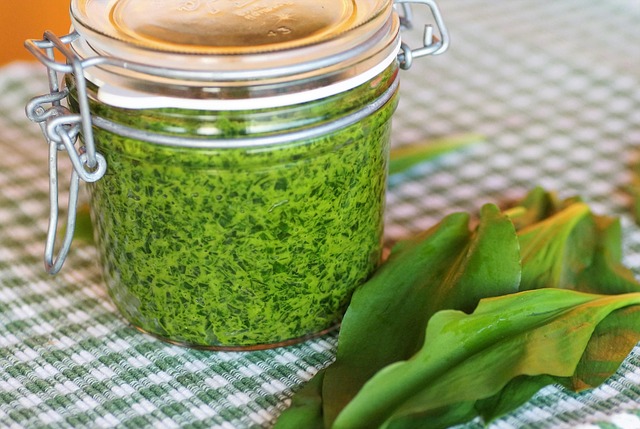
Classic basil pesto contains five ingredients: fresh basil, garlic, pine nuts, parmesan, and olive oil. That’s the full list. No onion, no shallots — those appear in pasta sauces, not pesto. Of the five, only one — garlic — is a toxicological concern. The others are either safe or simply high in fat.
Commercial pestos often substitute or supplement fresh garlic with garlic powder or garlic paste, which is a meaningful distinction because concentrated forms are far more potent per gram than fresh cloves (more on this below).
Why Pesto Is a Problem for Dogs
Garlic — the lead hazard
Garlic belongs to the allium family and is classified as toxic to dogs by every major veterinary toxicology authority. The toxic mechanism is oxidative damage to red blood cell membranes, leading to Heinz body formation and, at sufficient doses, haemolytic anaemia — a breakdown of RBCs faster than the body can replace them.
What makes garlic particularly concerning is that the damage begins before symptoms appear. According to the Merck Veterinary Manual, RBC damage starts within 24 hours of ingestion and peaks around 72 hours. Clinical signs — the visible symptoms — typically don’t appear until 3–5 days after significant exposure, by which point the damage is already well underway. A dog that seems fine the day after eating garlic is not necessarily fine.
Garlic powder is significantly more concentrated: VCA Hospitals notes that one teaspoon of garlic powder is equivalent to roughly eight fresh cloves. Commercial pesto that uses garlic powder or paste instead of counted fresh cloves delivers a higher and harder-to-estimate allium load per serving.
Fat content — pancreatitis risk
Pesto is extremely fat-dense. Olive oil, parmesan, and pine nuts together make a 2-tablespoon serving contain roughly 8–14 g of fat. Pine nuts are not toxic to dogs, but the high fat load carries its own risk: in susceptible dogs, a sudden high-fat meal can trigger acute pancreatitis, which can range from mild gastric upset to a serious, painful condition requiring veterinary care.
Salt — relevant for commercial products
Commercial pesto typically contains around 400–600 mg of sodium per 2-tablespoon serving. This isn’t at acute toxicity levels for a medium dog from a single serving, but it’s a significant amount for dogs with cardiac or renal disease, and it adds to other dietary sodium throughout the day. See the salt page for context on sodium thresholds.
How Much Garlic Is Actually Dangerous?
The Merck Veterinary Manual gives the toxic dose for onions in dogs as 15–30 g/kg body weight, and notes that garlic is 3–5 times more toxic than onion. Dividing through gives a derived garlic threshold of roughly 3–10 g/kg body weight for dogs. The Pet Poison Helpline similarly puts garlic at “about 5 times more toxic than onions.”
For a 20 lb (9.1 kg) dog, that threshold range corresponds to roughly 27–91 g of fresh garlic — about 7–23 medium cloves.
For a 10 lb (4.5 kg) dog, it drops to roughly 14–45 g — about 3–11 cloves.
Now, how much garlic is in a serving of pesto? A standard homemade recipe uses about 3 garlic cloves per cup of pesto (~16 tablespoons), which works out to roughly 1.5 g of garlic per 2-tablespoon serving. Garlic-heavy recipes (6 cloves per cup) roughly double that to ~3 g per serving.
| Scenario | Garlic per serving | % of lower threshold (20 lb dog) | % of lower threshold (10 lb dog) |
|---|---|---|---|
| Light recipe (3 cloves/cup) | ~1.5 g | ~6% | ~11% |
| Heavy recipe (6 cloves/cup) | ~3 g | ~11% | ~21% |
A single serving is well below acute toxicity territory for a healthy medium dog. This is why a lick of pesto is not an emergency — but it also does not mean pesto is safe.
The reason it matters: allium toxicity is cumulative. Each exposure adds to the RBC damage from previous exposures. A dog fed pesto-dressed pasta twice a week is receiving a regular allium load, and the effects accumulate over time below the threshold for any single acute episode. PPH notes that signs of garlic poisoning after small ingestions can be delayed up to a week — a dog eating small amounts regularly may show anaemia signs without any single meal being identifiable as the cause.
The commercial pesto caveat. A jar that lists “garlic” without specifying fresh vs. powder has an unknowable dose per serving. Garlic powder is roughly 11 times more concentrated per gram than fresh garlic. A commercial pesto using garlic powder can deliver significantly more allium per tablespoon than a fresh-garlic homemade version — and the label won’t tell you how much.
What To Do If Your Dog Ate Pesto
If your dog had a small taste — a lick off a spoon, a smear off the counter — the acute risk to a healthy adult dog of normal size is low. Garlic toxicity at that dose is unlikely. Make water available, watch for the signs below over the following week, and don’t make it a habit.
If your dog ate a significant amount — a full serving or more, or any amount eaten by a small dog, puppy, or dog with pre-existing anaemia or cardiac disease:
- Note the amount, the product (homemade or commercial), and the time. For commercial pesto, note the brand and whether the label specifies fresh garlic or powder — this affects the dose estimate.
- Do not try to induce vomiting unless a vet specifically instructs you to.
- Call your vet or an animal poison line. In the US, the Pet Poison Helpline is (855) 764-7661 (note: a per-incident fee of around $89 applies). Outside the US, contact your vet or your country’s nearest animal poison service.
- Do not wait for symptoms before calling. Because signs of allium toxicity are delayed 3–5 days, waiting to see whether symptoms appear is not a safe decision-making strategy after a significant ingestion.
Signs of Garlic Toxicity in Dogs
The serious signs are haematological — they reflect the breakdown of red blood cells — not gastrointestinal. If you see these after any garlic exposure in the preceding week, contact your vet and make the connection explicit:
Haematological signs — seek veterinary attention promptly:
- Pale, white, yellowish, or greyish gums
- Weakness or sudden exercise intolerance
- Rapid heart rate or increased breathing rate
- Lethargy or collapse
- Dark, red-tinged, or brownish urine (a sign of RBC breakdown products in the urine)
GI signs — may appear earlier, usually milder:
- Vomiting
- Diarrhoea
- Drooling
- Abdominal pain or discomfort
- Loss of appetite
Onset and timing: The Merck Veterinary Manual documents that RBC damage begins within 24 hours of ingestion, peaks around 72 hours, and clinical haemolysis typically manifests 3–5 days after exposure. For small doses, PPH notes signs can be delayed up to a week. This delayed onset is the single most important thing for an owner to know: a dog that shows no symptoms on the day it ate garlic is not necessarily out of danger.
Breed note: VCA Hospitals notes that certain breeds — particularly dogs of Japanese descent such as Akitas and Shiba Inus — may be more susceptible to allium toxicosis than other breeds.
For preparedness
ARCA Pet First Aid Kit
For households where pet emergencies are infrequent enough that response time matters, a first aid kit on hand is a small investment in preparedness — wound care, bandaging, and a reference for situations that don't require an emergency clinic but do require immediate response.
View on Amazon →What About Pesto as a Regular Addition?
The cumulative nature of allium toxicity makes this worth stating directly: pesto should not be a regular part of a dog’s diet, even in small amounts. Each exposure adds to the oxidative burden on red blood cells. Dogs fed garlic-containing foods regularly can develop chronic haemolytic anaemia without any single incident appearing to be the cause.
If you’re looking to add flavour or moisture to your dog’s food, olive oil in small amounts is generally tolerated (though it adds significant fat calories), and plain cooked meat without seasoning is far preferable to any condiment.
For a savoury meat treat
Stewart Pro-Treat Freeze-Dried Beef Liver
The meaty richness that draws dogs to the pasta bowl — without any of the garlic. Single-ingredient freeze-dried beef liver.
View on Amazon →Basil — the dominant ingredient by volume in pesto — is itself safe for dogs, so plain basil leaves added to food are fine if you’re after the herb flavour without the garlic.
Frequently Asked Questions
This FAQ summarises general veterinary guidance. It’s informational only and not a substitute for advice from your own vet, who knows your dog.
My dog licked a bit of pesto off the floor — should I worry?
A small lick is very unlikely to cause acute garlic toxicity in a healthy medium or large dog. Make water available and watch for any symptoms over the following week. If your dog is small, young, or already anaemic, or if the amount was more than a taste, a call to your vet is worthwhile.
Can dogs eat pesto if it’s homemade and has less garlic?
Less garlic reduces the allium load but doesn’t make pesto safe — any garlic is still garlic, and the fat content and cumulative concern remain. There’s no version of pesto that’s appropriate as regular dog food.
Does cooking pesto reduce the garlic toxicity?
No. Veterinary sources including the Merck Veterinary Manual list cooked garlic as toxic to dogs, not just raw. All forms — raw, cooked, powdered, and dehydrated — are included in veterinary toxicology guidance on allium toxicosis.
Why are the symptoms delayed?
Garlic’s toxic compounds cause oxidative damage to red blood cells. The RBCs don’t break down immediately — the damage accumulates over 24–72 hours before the resulting haemolysis causes enough anaemia to produce visible clinical signs, typically 3–5 days after ingestion.
Is red pesto safer than green pesto?
Red pesto (typically made with sun-dried tomatoes and sometimes different nuts) still almost always contains garlic, and the same concerns apply. It’s not a safer alternative.
For further reading
The Forever Dog by Rodney Habib and Karen Becker
A well-regarded reference covering canine nutrition, health, and longevity — for dog owners interested in a deeper look at the choices behind their dog's diet and lifestyle.
View on Amazon →About This Guide
This guide was researched and written by Claire Donnelly for Is It Safe For My Dog?. We are not veterinarians. Each guide is compiled from published, publicly accessible veterinary and toxicology sources — for this page, the Merck Veterinary Manual, the ASPCA, the Pet Poison Helpline, and VCA Hospitals — and the specific figures are cross-checked against more than one source before publication. Where sources disagree or precise figures are unavailable, we say so. This is general information to help you make an informed decision; it does not replace a consultation with your own vet, who can account for your individual dog’s size, age, and health.
Sources for the figures on this page
- Merck Veterinary Manual — Garlic and Onion (Allium spp) Toxicosis in Animals (toxic dose thresholds: onion 15–30 g/kg; garlic 3–5× more toxic than onion; RBC damage timeline; Heinz body mechanism; all forms including cooked listed as toxic)
- ASPCA Animal Poison Control — Garlic (garlic classified Toxic to dogs; N-propyl disulfide as toxic compound; clinical signs)
- Pet Poison Helpline — Garlic (5× more toxic than onions; cumulative small-dose risk; delayed onset up to 1 week; clinical signs)
- VCA Hospitals — Onion, Garlic, Chive, and Leek Toxicity in Dogs (oxidative RBC mechanism; delayed onset; garlic powder vs. fresh potency: 1 tsp powder = 8 cloves fresh; breed susceptibility)
This page is informational only and does not constitute veterinary or medical advice. If you are worried about your dog, contact your vet or a local animal poison service.