Is Garlic Safe for Dogs?
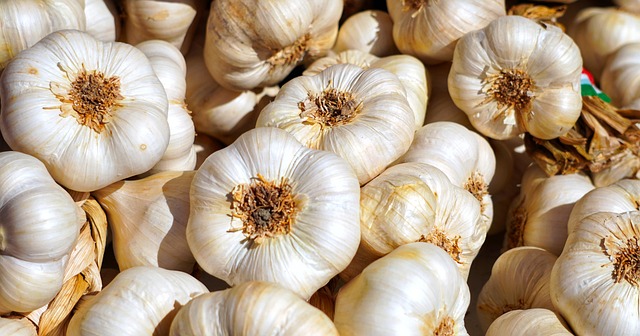
No. Garlic is toxic to dogs — and it’s the most potent member of the onion family, roughly 3–5 times stronger than onion by weight (the Merck Veterinary Manual puts it at 3–5×; the AKC states “five times more toxic than onions”). If onions are a genuine hazard, garlic is that same hazard concentrated.
This is another case where the “toxic to dogs” label is accurate and worth taking at face value — unlike foods whose reputation the evidence doesn’t support (oregano, lemon, avocado). With garlic there’s an added wrinkle: a persistent myth in the other direction, claiming garlic is good for dogs. It isn’t, and we address that head-on below.
All forms are toxic — raw, cooked, dried, and powdered — and garlic powder is especially dangerous because it’s so concentrated.
How Garlic Poisons Dogs — the Mechanism
Garlic works by the same route as the rest of the allium family. Its sulfur compounds (thiosulphates and related organosulfur compounds) cause oxidative damage to red blood cells:
- The compounds chemically damage (oxidise) the red-blood-cell membranes.
- Damaged haemoglobin forms clumps called Heinz bodies (Merck Veterinary Manual).
- The spleen removes these damaged cells, or they rupture.
- Cells are destroyed faster than they’re replaced → haemolytic anaemia.
As with onion, the anaemia is delayed — typically developing over 3–5 days — so a dog can seem fine immediately after eating garlic and still be heading toward serious illness. The full shared mechanism is covered on the onions hub page.
How Much Garlic Is Toxic? The Dose Math
Merck gives onion’s clinical threshold (15–30 g/kg) and garlic’s potency multiplier (3–5×) rather than a separate garlic figure. Applying that multiplier puts garlic’s clinical threshold in the region of ~5 g/kg — which we use as an approximate guide, not a precise cutoff. A typical garlic clove weighs about 5 g.
As with onion, these are thresholds for expected clinical illness, not safe-below lines — the effect is cumulative and no safe dose is established.
| Dog weight | ~garlic threshold (~5 g/kg) | ≈ fresh cloves (~5 g each) | ≈ garlic powder (1 tsp ≈ 8 cloves) |
|---|---|---|---|
| 5 kg (11 lb) | ~25 g | ~5 cloves | ~⅔ tsp |
| 10 kg (22 lb) | ~50 g | ~10 cloves | ~1¼ tsp |
| 20 kg (44 lb) | ~100 g | ~20 cloves | ~2½ tsp |
| 30 kg (66 lb) | ~150 g | ~30 cloves | ~3¾ tsp |
The clove counts sound almost reassuring — until you look at the powder column, which is where garlic gets genuinely dangerous.
Garlic Powder: the Concentrated Trap
Here’s the single most important practical fact on this page: one teaspoon of garlic powder is equivalent to roughly eight cloves of fresh garlic (VCA Hospitals). Drying and grinding remove the water and concentrate the toxic compounds, so garlic powder delivers far more allium per spoonful than fresh garlic does per clove.
That reframes the dose table. A small dog doesn’t need to raid a garlic bulb to reach a concerning dose — a couple of teaspoons from a spilled jar, a heavily seasoned batch of garlic-powder snacks, or a garlic-salt rub can get there. Garlic powder is also an invisible ingredient in a huge range of foods: seasoning blends, garlic bread, savoury snacks, spice rubs, many sauces and broths, and prepared meals. Read labels for “garlic powder,” “garlic granules,” “dehydrated garlic,” and “garlic extract.” The dedicated garlic powder page covers this concentrated form in more detail.
”But Isn’t Garlic Good for Dogs?” — the Myth, Answered Honestly
Unusually for a toxin, garlic has a fan base. You’ll find claims — often from raw-feeding communities and some supplement makers — that small amounts of garlic benefit dogs, especially as a natural flea and tick repellent or immune booster. This is worth addressing directly, because it’s the one allium where owners are sometimes encouraged to feed the toxin.
The evidence doesn’t support it. The AKC states plainly that there’s “no solid scientific evidence that garlic repels or kills fleas, and it can cause harm if your dog eats too much” — adding that “the amount of garlic required to potentially repel fleas is not well standardized and often approaches or exceeds the toxic threshold for dogs.” In other words, the dose some sources recommend for “benefits” sits uncomfortably close to the dose that causes harm, and the benefit itself is unproven.
Our position follows the veterinary consensus: there’s no established safe or beneficial dose of garlic for dogs, and the risk — cumulative oxidative red-cell damage — is real. Use a vet-recommended flea product, not garlic.
Where Dogs Actually Encounter Garlic
- Garlic bread and garlic-butter dishes — a very common route, often eaten in quantity, with added fat and salt on top of the allium.
- Garlic powder in seasonings, rubs, and snacks — the concentrated, high-dose route.
- Raw garlic — dropped cloves, or dogs that raid a bulb.
- Cooked garlic — in sauces, stir-fries, curries, roasted dishes; cooking does not reduce toxicity.
- Garlic supplements — deliberately given under the flea/immune myth; a genuine and avoidable exposure.
Symptoms to Watch For
The same two-stage, delayed pattern as onion:
Early (hours) — gastrointestinal:
- Vomiting, diarrhoea, drooling, abdominal pain, reduced appetite
Later (typically 3–5 days) — the anaemia:
- Lethargy and weakness
- Pale gums
- Rapid heart rate
- Rapid breathing or panting
- Reddish or brown urine
- Collapse in severe cases
The delayed onset is the danger: a dog that seems fine the day after eating garlic bread is not necessarily clear. Watch the full 3–5 day window.
What To Do
If your dog has eaten garlic in any form beyond a trivial trace — call your vet or an animal poison line now. Because garlic is more potent than onion and powder is more concentrated still, the threshold to call should be lower than you might expect.
- Confirmed or suspected significant ingestion: Call your vet, the Pet Poison Helpline, or the ASPCA Animal Poison Control Center. Have the dog’s weight and an estimate of the amount and form (fresh vs. powder makes a big difference).
- Any garlic powder / concentrated exposure, or any small dog: Higher priority — this is where the toxic dose is reached most easily.
- A trivial trace (a lick of a garlic-containing sauce) in a healthy large dog: lower concern, but note it and watch for 3–5 days.
- Don’t induce vomiting at home unless a vet directs you to. There’s no home treatment for allium toxicosis; care is veterinary (decontamination, support, transfusion in severe cases).
A Note on Breed Sensitivity
As with onion, Japanese breeds — the Akita and Shiba Inu in particular — carry an inherited red-blood-cell trait that makes them more susceptible to allium oxidative damage. For these breeds, be especially strict about garlic, including “supplement” doses.
Frequently Asked Questions
This FAQ summarises general veterinary toxicology guidance. It’s informational only and not a substitute for advice from your own vet, who knows your dog.
Is garlic really more toxic than onion?
Yes — by weight, garlic is roughly 3–5 times more potent than onion (the AKC says five times). Gram for gram it takes less garlic than onion to cause harm, and garlic powder concentrates that potency further.
Isn’t garlic a natural flea treatment?
There’s no reliable evidence that garlic repels or kills fleas, and the amounts suggested for that purpose can approach the toxic dose. It’s not a safe trade-off. Use a veterinary flea product instead.
My dog ate garlic bread and seems fine — should I worry?
Possibly. Note how much and the dog’s size, and watch for 3–5 days — the anaemia from allium toxicity is delayed. Garlic bread also adds fat and salt. For anything beyond a small taste, call your vet.
Are garlic supplements for dogs safe?
We don’t recommend them. There’s no established safe or beneficial dose, the risk is cumulative, and safer, proven alternatives exist for the things garlic is marketed to do (like flea control).
Does cooking garlic make it safe?
No. Cooking, roasting, and drying do not remove the toxic compounds. Cooked garlic in a sauce or roast is still a concern.
About This Guide
This guide was researched and written by Claire Donnelly for Is It Safe For My Dog?. We are not veterinarians. Each guide is compiled from published, publicly accessible veterinary and toxicology sources — for this page, the ASPCA, the Pet Poison Helpline, the Merck Veterinary Manual, VCA Hospitals, and the American Kennel Club — and cross-checked before publication. This is general information to help you understand the risk; it does not replace a consultation with your vet, and any suspected allium ingestion warrants direct veterinary advice.
Sources for the figures on this page
- Merck Veterinary Manual — Garlic and Onion (Allium spp.) Toxicosis in Animals (garlic 3–5× more toxic than onion; onion threshold 15–30 g/kg used to derive garlic’s approximate ~5 g/kg guide; raw, cooked, dehydrated, and granulated forms all toxic; Heinz-body haemolytic anaemia; delayed onset)
- VCA Hospitals — Onion, Garlic, Chive, and Leek Toxicity in Dogs (garlic named and “the most toxic” allium; 1 teaspoon garlic powder ≈ 8 cloves of fresh garlic; oxidative red-blood-cell damage; onset may take several days; clinical signs including pale gums, elevated heart rate, red-coloured urine)
- AKC — Can Dogs Eat Garlic? (garlic “five times more toxic than onions”; flea-repellent claim rebutted — “no solid scientific evidence that garlic repels or kills fleas,” dose “often approaches or exceeds the toxic threshold”; powder and concentrated forms most potent; cooked garlic retains toxicity)
- ASPCA Animal Poison Control — Garlic (garlic classified toxic to dogs; organosulfur compounds causing red-blood-cell damage)
- Pet Poison Helpline — Garlic (garlic toxicity in dogs; more concentrated than onion by weight; cumulative effect of repeated exposures)
- Clove and powder weight references — a garlic clove ≈ 5 g, plus the VCA teaspoon-to-clove equivalence, used to convert thresholds into everyday amounts; general food-composition data alongside the VCA figure, not independent veterinary sources
This page is informational only and does not constitute veterinary or medical advice.