Affiliate disclosure: This guide contains affiliate links. If you purchase via these links, we may earn a small commission at no extra cost to you. This never affects our safety assessments — see our Editorial Standards for how we work.
Recommendations on this page
- For preparedness: ARCA Pet First Aid Kit — a small investment for unexpected pet emergencies. View on Amazon →
- Further reading: The Forever Dog by Habib & Becker — a well-regarded reference on canine nutrition and longevity. View on Amazon →
Are Capers Safe for Dogs?
Short version: capers aren’t toxic to dogs — the concern is salt, and the amount that matters is almost never the amount involved.
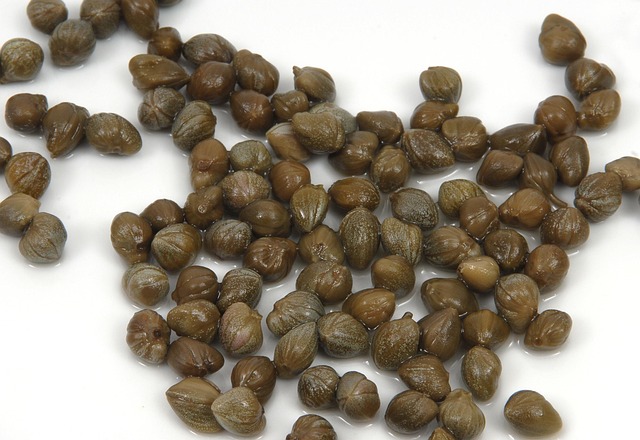
A caper is just a pickled flower bud, and there’s no toxin in it. What makes capers worth a second’s thought is that they’re always sold brined or salt-packed, so they’re intensely salty by concentration. But capers are eaten in tiny amounts — a scattering as a garnish, never by the spoonful — so the realistic sodium a dog picks up off a plate is trivial. This is one of the calmer pages on the site: a couple of capers licked up is a non-event for most dogs.
So why is it a Caution and not Safe? Here’s the honest distinction. Some foods reach Safe on this site because the scary part is separable from a fundamentally clean food — an apple is wholesome, and the only concern (the core and seeds) is a removable prep step layered on top. Capers are different: the salt isn’t an add-on you can leave out, it’s inherent to the product itself. There’s no “plain caper” sold in any shop — every caper you’ll encounter is already brined or salt-cured. When the concern is built into the food rather than something you can trim away, the honest landing is Caution, even when — as here — that concern barely registers at the amounts anyone actually uses. (It also keeps capers consistent with their nearest shelf-mates, pickles and olives, which sit at Caution for the same salt-by-nature reason.)
The Caper Itself Has No Toxin
Worth stating plainly, because it’s the reassuring half of the page: the caper bud carries no compound that’s toxic to dogs. It’s not an allium, it’s not a stone fruit, there’s no xylitol — none of the mechanisms that drive genuine toxicity elsewhere on the site apply. Everything below is about the salt it’s packed in, not the caper.
Sodium: Intense by Concentration, Trivial by Serving
This is the whole story, and the numbers make it calm:
- A single caper carries roughly 8 mg of sodium. A few off a plate — say five — is around 40 mg. For context, that’s a rounding error against the amount of salt that actually causes problems: veterinary toxicology (Merck) puts salt toxicosis in the range of 2–3 grams of salt per kilogram of body weight — an amount you simply cannot reach with garnish-sized servings of capers.
- A whole tablespoon (8–9 capers) is about 200 mg sodium — still small, and more than anyone feeds a dog on purpose.
So for the everyday case — a dog hoovering up a few capers that fell off a plate of pasta or salmon — there’s nothing to do but note it and move on.
The one scenario worth a moment’s thought is a small dog getting into a whole jar. A 100 g jar, drained, holds roughly 2,300 mg of sodium (about 5.8 g of salt). For a large dog that’s an upset-stomach-and-extra-thirst event, not a poisoning. But for a small (say 3 kg) dog, that starts to approach the range where salt genuinely matters — so a jar-raid by a little dog is the one case to take seriously, offer fresh water, and call your vet if the dog seems unwell. That’s the ceiling of the concern here, and it takes a fairly determined dog and an open jar to get there. See the salt page for the full sodium picture.
The Vinegar in the Brine
Most caper brine is vinegar-based. As on the site’s other pickled-food pages, vinegar is at most a mild digestive irritant in larger amounts — it can add to loose stools or a bit of stomach upset if a dog gets into the brine, but it isn’t a toxicity concern. It’s a footnote to the salt, not a separate hazard. (Capers are, in this respect, close cousins of pickles.)
Salt-Packed vs. Brined
One quick distinction: some capers are packed in dry salt rather than vinegar brine, and these are even more concentrated in sodium by weight (they’re meant to be soaked and rinsed before cooking). It doesn’t change the picture much — the servings are still tiny — but salt-packed capers are the saltier of the two, so rinse them if any are going anywhere near a dog.
The Dishes Capers Turn Up In
Capers rarely appear alone; they’re a seasoning within a dish. In those cases the caper is usually the least of the concerns:
- Piccata (chicken or veal): capers in a butter, white wine, and lemon sauce. If a dog gets a piece, the things to weigh are the butter-rich fat load and the wine — not the handful of capers. That’s the dish, not the caper.
- Tapenade: a puréed spread of olives, capers, and often garlic and anchovies. Here the note worth flagging is the garlic — an allium, genuinely toxic to dogs — plus the salt of the olives and anchovies. But as with piccata, that’s a property of the spread, not of capers themselves; the caper brings nothing toxic to it. If a dog eats a meaningful amount of a garlicky tapenade, treat it as an allium exposure and judge it by the garlic.
The through-line: when capers show up in something richer, read the dish by its other ingredients.
Symptoms to Watch For
Realistically, from a garnish-sized amount, none — a few capers won’t produce symptoms. If a dog got into a larger quantity (a jar, or a caper-heavy dish), the things to watch for are salt- and brine-related:
- Increased thirst, more urination, mild vomiting or diarrhoea, stomach discomfort
- After a genuinely large salty amount in a small dog, the more serious sodium signs — marked lethargy, wobbliness or unsteadiness, tremors — warrant a prompt vet call
For preparedness
ARCA Pet First Aid Kit
For the one caper scenario that can actually matter — a small dog getting into a whole jar — having a first aid kit on hand is a sensible bit of preparedness while you reach your vet. It isn't something this calm little page expects you to need, but it's a reasonable thing to keep around regardless.
View on Amazon →What To Do
- A few capers off a plate, any healthy dog: nothing needed. Make sure fresh water’s available; carry on.
- A caper-heavy dish (a plate of piccata or pasta puttanesca): judge it by the richer ingredients — the fat, the wine, or any garlic — more than the capers.
- Tapenade with garlic: treat a meaningful amount as an allium exposure and watch over the next few days.
- A small dog into a whole jar: offer water, watch for the salt signs above, and call your vet if the dog seems at all unwell — this is the one caper scenario that can matter.
Frequently Asked Questions
This FAQ summarises general veterinary and nutrition guidance. It’s informational only and not a substitute for advice from your own vet, who knows your dog.
Are capers toxic to dogs?
No — the caper itself contains no toxin. It’s a pickled flower bud, not an allium or a stone fruit, and there’s nothing poisonous in it. The only reason capers get a “caution” rather than a clean bill is the salt they’re preserved in — and even that is a small concern at the tiny amounts capers are actually used in.
My dog ate a few capers — should I worry?
Almost certainly not. A single caper is only about 8 mg of sodium, so a few off a plate is a trivial salt load for most dogs. Just make sure fresh water is available and carry on as normal. The only version of this worth a vet call is a small dog that got into a whole jar, where the total salt is more meaningful.
Why are capers a “caution” if they aren’t toxic?
Because the salt is built into the product — there’s no unsalted caper to buy. Unlike a food where you can remove the risky part (coring an apple, say), a caper is brined or salt-cured by its very nature, so it’s never a truly “clean” food to hand a dog. At garnish amounts the salt barely registers, but since you can’t separate it out, the honest call is caution rather than fully safe.
Can dogs eat chicken piccata because of the capers?
The capers are the least of it. Piccata’s concerns are the butter-and-oil richness and the white wine, not the small amount of capers in the sauce. A little piece is unlikely to harm a healthy dog, but it’s a rich, salty dish rather than a dog-friendly one — and if the recipe included garlic, that matters more than anything the capers contribute.
About This Guide
This guide was researched and written by Claire Donnelly for Is It Safe For My Dog?. We are not veterinarians. Each guide is compiled from published, publicly accessible veterinary and toxicology sources — for this page, the American Kennel Club, PetMD, the ASPCA, and the Merck Veterinary Manual — and cross-checked before publication. Because neither the AKC nor PetMD publishes a capers-specific article, we apply their guidance on brined and pickled foods (their pickles coverage) to capers and say so openly, with the salt figures anchored to veterinary toxicology. This is general information; it does not replace a consultation with your vet.
Sources for the figures on this page
- American Kennel Club — Can Dogs Eat Pickles? (brined/pickled foods not toxic but a caution on salt and added seasonings; applied here to capers as a brined condiment, no AKC capers page existing)
- PetMD — Can Dogs Eat Pickles? (corroborates the pickled-food picture — sodium and preparation as the concerns, not inherent toxicity; applied here as the closest brined-condiment analog)
- ASPCA Animal Poison Control — People Foods to Avoid Feeding Your Pets (excess salt cautioned; garlic listed as a hazard — relevant to garlicky tapenade)
- Merck Veterinary Manual — Salt Toxicosis in Animals (sodium toxicosis in the range of ~2–3 g salt per kg body weight; used to show that garnish-sized caper servings fall far below any concerning dose)
- Composition figures — brined capers ~200 mg sodium per tablespoon (~8 mg per caper), salt-packed slightly higher by weight; a 100 g jar ~2,300 mg sodium; from published food-composition data, used to make the realistic-exposure math concrete
This page is informational only and does not constitute veterinary or medical advice.