Affiliate disclosure: This guide contains affiliate links. If you purchase via these links, we may earn a small commission at no extra cost to you. This never affects our safety assessments — see our Editorial Standards for how we work.
Recommendations on this page
- For preparedness: ARCA Pet First Aid Kit — a small investment for unexpected pet emergencies. View on Amazon →
- Further reading: The Forever Dog by Habib & Becker — a well-regarded reference on canine nutrition and longevity. View on Amazon →
Is Coleslaw Safe for Dogs?
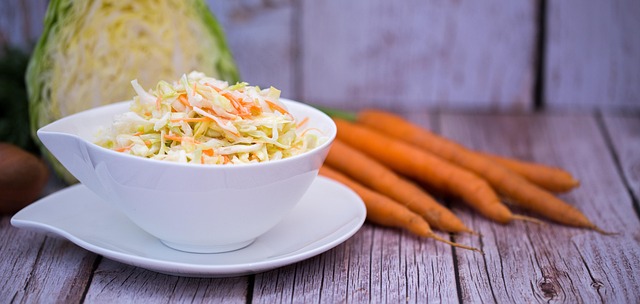
Here’s the honest headline: the cabbage isn’t the problem. Coleslaw’s base — shredded cabbage and carrot — is non-toxic and one of the more harmless things a dog could get into. Coleslaw is a Caution because of everything that gets mixed into it.
There are three everyday concerns and one conditional-but-serious one:
- Onion — coleslaw usually contains real onion (minced onion, scallions, or onion powder), and onion is genuinely toxic to dogs. This is the leading concern.
- Fat — the classic creamy dressing is mayonnaise-based and high in fat, a pancreatitis trigger at larger amounts.
- Sugar — the dressing typically carries a real dose of added sugar.
- Raisins — some coleslaw and slaw variants add raisins, which can cause acute kidney failure and sit in a completely different league from anything else in the bowl. More on this below, because it’s the one thing worth checking before you share a single bite.
So the pattern here is the same one that applies to a lot of prepared human dishes: the base ingredient is fine, and the preparation is where the risk actually lives. Let’s take it piece by piece.
The Cabbage Base: the Reassuring Part
Start with the good news. Cabbage and carrot — the slaw base — are not toxic to dogs. Plain cabbage is a genuinely dog-safe vegetable in moderation; its only real drawback is that, like other cruciferous vegetables, it can cause gas and mild digestive upset in larger amounts. Carrot is a well-liked, low-risk vegetable too.
In other words, if coleslaw were nothing but shredded raw cabbage and carrot, this would be a near-Safe page. It isn’t, because coleslaw is almost never served plain — see the cabbage and carrots pages for the base vegetables on their own.
Onion: the Leading Concern, and It’s In the Product
This is the finding that matters most, and it’s worth being precise about: coleslaw usually contains real onion, mixed directly into the dish. Standard recipes call for a quarter-cup of minced onion, or scallions / green onions, or onion powder in the dressing. That’s not a trace of onion in a sauce elsewhere on the plate — it’s onion in the product itself.
That distinction matters because onion and garlic are genuinely toxic to dogs. Every part of the onion plant — and every form, including powder — contains compounds that damage a dog’s red blood cells and can cause a form of anaemia. The effect is dose-dependent and often delayed by several days, and dried or powdered onion is more concentrated by weight than the fresh vegetable. A dog that eats a bowl of onion-containing coleslaw has had a real allium exposure, and onion powder in the dressing raises that, not lowers it.
So the practical rule: treat any onion-containing coleslaw as an allium exposure and judge it by the amount — a stolen mouthful is different from a dog clearing a party-sized bowl. If a meaningful amount was eaten, watch for the delayed signs over the following 3–5 days (see below), and when in doubt, call your vet.
Fat: the Mayonnaise Dressing
The classic creamy coleslaw dressing is mayonnaise-based (sometimes with sour cream), which makes fat the second real concern. Mayonnaise is roughly 75–80% fat, and a large, fatty serving is a genuine pancreatitis trigger — particularly in small dogs and breeds prone to it. We’ve covered exactly how this works on the mayonnaise page, so there’s no need to re-derive it here: the short version is that a lick is minor, but a real serving of creamy slaw is a meaningful fat load.
Sugar: the Sweet in the Dressing
Coleslaw dressing — especially the sweet, creamy deli style — carries added sugar, typically anywhere from a tablespoon up to a quarter-cup per batch. On its own this is the mildest of the concerns: it’s empty calories and possible stomach upset, and it matters more for diabetic or overweight dogs. See the sugar page for the detail. It’s worth noting mainly because it stacks on top of the fat and onion rather than because it’s dangerous by itself.
The Raisin Catch — Check Before You Share
This is the single most important thing on the page, and it’s easy to miss. Classic cabbage coleslaw doesn’t contain raisins — but a meaningful number of common slaw variants do. Raisin coleslaw, Waldorf-style coleslaw, apple-and-raisin slaw, broccoli slaw, and carrot-raisin slaw are all standard, widely-made recipes that add raisins (or dried cranberries) for sweetness.
Here’s why that changes everything: raisins and grapes can cause sudden, acute kidney failure in dogs — and unlike onion, the toxic dose can be unpredictably low, and there’s no safe amount to count on. That is a categorically more serious risk than the fat, sugar, or even the onion elsewhere in the bowl. To put the asymmetry plainly: the rest of this page is about caution and moderation; the raisins are about don’t, and call your vet if it happened.
So the rule is simple and it’s the one to remember from this whole page: if the coleslaw has raisins (or dried cranberries) in it, treat any amount a dog ate as a potential emergency — see the raisins and grapes pages, and contact your vet or a pet poison line right away. When you can’t tell whether a slaw had raisins, err on the side of calling.
Vinegar-Based (“Tangy”) Coleslaw: Lower Fat, Not Automatically Safe
Not all coleslaw is creamy. Vinegar-based slaw (the tangy, KFC-adjacent style) skips most or all of the mayonnaise, which meaningfully lowers the fat concern — so on the pancreatitis front it’s gentler. But it is not automatically clean: these recipes still commonly include onion and added sugar, and the vinegar itself is a mild digestive irritant in larger amounts. So a vinegar slaw trades the fat problem down but usually keeps the onion and sugar — check it the same way.
Symptoms to Watch For
From the fat, sugar, or vinegar (GI upset):
- Vomiting, diarrhoea, gas, abdominal discomfort
- After a large, fatty serving, watch for pancreatitis signs over 24–72 hours — repeated vomiting, a hunched or painful posture, marked lethargy, loss of appetite
From onion (allium — often delayed 3–5 days):
- Lethargy, weakness, pale gums, reddish or brown urine, reduced appetite
From raisins (potential kidney injury — don’t wait for signs):
- Vomiting, then lethargy, increased or decreased thirst and urination, loss of appetite — but the priority is to call your vet immediately rather than watch and wait, because early treatment matters most
For preparedness
ARCA Pet First Aid Kit
Most coleslaw scenarios are a matter of watching for stomach upset — but the two that aren't (an onion-heavy bowl, or a slaw with raisins in it) are exactly the kind of thing worth being ready for. A first aid kit is a small, sensible bit of preparedness while you get to your vet.
View on Amazon →What To Do
- A lick or small stolen bite of plain-ish creamy slaw, healthy dog: low concern. Watch for mild stomach upset; keep an eye out that it wasn’t an onion- or raisin-heavy version.
- A real serving of creamy coleslaw: monitor for GI upset and, given the fat, pancreatitis signs over 1–3 days — especially in a small dog or an at-risk breed.
- Any onion-containing coleslaw, meaningful amount: treat it as an allium exposure and watch for the delayed signs over 3–5 days; call your vet if the amount was significant.
- Coleslaw with raisins or dried cranberries — any amount: don’t wait. Contact your vet or a pet poison line right away (see raisins).
- Want to share the safe part? Give plain shredded cabbage or carrot, or plain green beans — the vegetables without the dressing.
Frequently Asked Questions
This FAQ summarises general veterinary and nutrition guidance. It’s informational only and not a substitute for advice from your own vet, who knows your dog.
My dog ate coleslaw with raisins in it — what should I do?
Treat it as urgent and call your vet or a pet poison line straight away, regardless of how much was eaten. Raisins (and grapes) can cause acute kidney failure in dogs, and the toxic dose can be unpredictably low — this is the one coleslaw ingredient that warrants immediate action rather than watching and waiting. Raisins turn up in raisin coleslaw, Waldorf slaw, broccoli slaw, and carrot-raisin slaw, so if you’re unsure whether a slaw contained them, err on the side of calling. See the raisins and grapes pages.
Is coleslaw safe for dogs?
Not really — it’s a Caution. The cabbage base is harmless, but coleslaw is almost always dressed, and the dressing usually brings onion (toxic to dogs), a high-fat mayonnaise base (a pancreatitis risk in quantity), and added sugar. A small stolen bite of a plain-ish slaw is unlikely to harm a healthy dog, but coleslaw isn’t something to share on purpose — and always check it doesn’t contain raisins first.
Is vinegar-based coleslaw any safer than the creamy kind?
Somewhat, on one axis. Skipping the mayonnaise meaningfully lowers the fat, so a vinegar-based slaw is gentler on the pancreatitis front. But it usually still contains onion and sugar, and vinegar itself can irritate the stomach in larger amounts — so it’s lower-risk, not no-risk. Check it for onion and raisins the same way you would the creamy version.
Can dogs eat the cabbage in coleslaw?
The cabbage itself, plain, yes — cabbage is a non-toxic vegetable for dogs in moderation, with gas being the main side effect. The problem is that in coleslaw the cabbage comes coated in dressing and mixed with onion (and sometimes raisins), which is where the risk sits. If you want to give your dog the good part, give plain shredded cabbage or carrot instead.
About This Guide
This guide was researched and written by Claire Donnelly for Is It Safe For My Dog?. We are not veterinarians. Each guide is compiled from published, publicly accessible veterinary and toxicology sources — for this page, the American Kennel Club, PetMD, the Merck Veterinary Manual, and the ASPCA — and cross-checked before publication. Because coleslaw is a mixed dish rather than a single ingredient, we assess it by its components: the cabbage base from the AKC and PetMD cabbage guidance, and the onion from established allium-toxicity references, with the fat, sugar, and raisin concerns covered in depth on our dedicated pages for those ingredients. This is general information; it does not replace a consultation with your vet.
Sources for the figures on this page
- American Kennel Club — Can Dogs Eat Cabbage? (cabbage non-toxic to dogs in moderation; cruciferous vegetables can cause gas; used here for the slaw’s cabbage base)
- PetMD — Can Dogs Eat Cabbage? (corroborates cabbage as non-toxic with gas/digestive upset as the main caveat; used here for the base)
- Merck Veterinary Manual — Garlic and Onion (Allium spp.) Toxicosis in Animals (onion and garlic toxic to dogs; dose-dependent, often-delayed damage to red blood cells; dried/powdered forms more concentrated — applied to the onion in coleslaw)
- ASPCA Animal Poison Control — People Foods to Avoid Feeding Your Pets (onion and garlic listed as hazards; fatty foods associated with GI upset and pancreatitis; grapes and raisins listed as toxic)
- Composition figures — creamy coleslaw dressing is mayonnaise-based (~75–80% fat) with typically 1 tbsp–¼ cup added sugar per batch, and commonly includes ¼ cup minced onion, scallions, or onion powder; from published recipe and food-composition data, used to characterise a typical preparation. Full toxicology for the fat, sugar, and raisin concerns lives on the linked mayonnaise, sugar, and raisins pages.
This page is informational only and does not constitute veterinary or medical advice.