Affiliate disclosure: This guide contains affiliate links. If you purchase via these links, we may earn a small commission at no extra cost to you. This never affects our safety assessments — see our Editorial Standards for how we work.
Recommendations on this page
- For preparedness: ARCA Pet First Aid Kit — a small investment for unexpected pet emergencies. View on Amazon →
- Further reading: The Forever Dog by Habib & Becker — a well-regarded reference on canine nutrition and longevity. View on Amazon →
Are Dates Safe for Dogs?
Let’s answer the question that brings most people to this page first, because it’s the scary one — and the answer is reassuring.
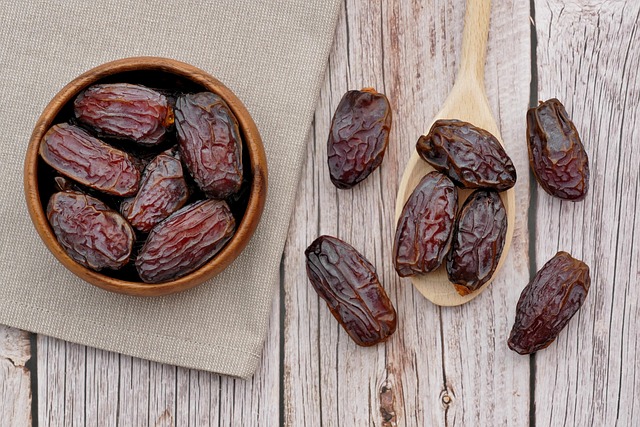
Dates are not raisins. Both are dried fruit, so it’s completely natural to wonder whether the well-known raisin danger applies. It doesn’t, and the reason is worth understanding: dates and grapes are not the same plant, or even close. Dates are the fruit of the date palm (Phoenix dactylifera, in the palm family); grapes are berries from a vine (Vitis, an entirely different family). The toxin that makes grapes and raisins genuinely dangerous to dogs is specific to the grape plant — not to “dried fruit” as a category. Drying a grape into a raisin concentrates that grape-specific toxin; drying a date just concentrates a date, which never had it.
So a dog that ate a date has not eaten a raisin-equivalent. (More on this in the FAQ, because it’s the single most important thing on this page.)
With that cleared, dates come down to two things: a pit, and sugar. Neither is a poison — but one is worth a real, ongoing bit of discipline. Here’s the honest breakdown.
The Pit: a Choking Risk, Not a Poison
Each date has one hard pit, and it looks a lot like a cherry or plum stone — which raises a fair question, because cherry, plum, peach, and apricot pits do contain cyanide-releasing compounds. Does the date pit?
No. That cyanide concern belongs to a specific group of stone fruits (the Prunus genus — cherries, plums, peaches, apricots). The date is a different plant entirely, and its pit does not contain those cyanogenic compounds. So the date pit is purely a mechanical hazard: a choking risk, something that can crack a tooth, and — if swallowed by a smaller dog — a potential intestinal obstruction. It is not toxic.
This is the same shape as the apple page: there, the seeds were the worry and turned out to be a non-issue once you looked closely, leaving the woody core as a purely physical thing to remove. Dates are the same — the pit is something you take out, not something you fear. And conveniently, most dates are sold pitted, so the clean version is usually the one you already have. If you’re giving your dog a bit of date, use a pitted one (or remove the pit first) and the whole question disappears. (For the contrast with genuinely toxic pits, see the cherries page.)
The Real Concern: Sugar, and Why It’s About Concentration, Not Danger
Here’s what’s actually left once the raisin fear and the pit are dealt with — and it’s worth being precise about it, because it’s a different kind of concern than you’ll find on a lot of other pages here.
Dates are extremely sugar-dense: around 66% sugar by weight — roughly six times an apple (~10%). A single large Medjool date packs about 16 grams of sugar, which is on the order of four teaspoons of sugar in one bite-sized fruit. Dates are, essentially, nature’s candy.
But notice what kind of problem that is. On some pages, a food is a Caution because of a genuinely serious mechanism — the fat in cheese or bacon that can trigger pancreatitis, or the sodium in a brined food. Those are cautions about danger: something that can actually make a dog acutely ill.
Dates are not that. The sugar in a date isn’t a distinct or severe hazard — it’s ordinary fruit sugar, the same thing that’s in an apple. It’s just concentrated. So this is a caution about density, not danger: a plain pitted date won’t hurt a healthy dog, it’s simply a lot of sugar in a very small package. The practical consequence is portion discipline, not avoidance — keep it to a small piece, occasionally. It matters more for small dogs (where one Medjool is a big share of the day’s calories), and for overweight or diabetic dogs, where the concentrated sugar is a real consideration. The underlying sugar story — dental health, weight, diabetes — is the same one we cover on the sugar page; dates just deliver it in a denser form than most fruit.
In short: the pit clears completely, the same way apple’s seeds did — but the sugar doesn’t clear, it’s just concentrated. That’s why dates are a Caution and apple is Safe. Not because dates are dangerous, but because they’re dense enough that “how much” genuinely matters.
Date Syrup and Date Sugar
Dates also show up as date syrup and date sugar, marketed as “natural” sweeteners. For a dog, treat these as exactly what they are: concentrated sugar. They’re the same portion-size story as whole dates, just more so — a sweetener, not a health food, and nothing to actively give. One helpful simplicity here: unlike sugar-free syrups (see maple syrup, where the sugar-free version can hide dangerous xylitol), there’s no “sugar-free date sugar” category to worry about — date sugar simply is the sugar. So it carries the ordinary sugar caution and nothing sharper.
Energy Balls and Protein Balls: Read the Other Ingredients
The one prepared form worth flagging is the date-based “energy ball” or “protein ball” — a popular health snack where dates are the sticky base, blended with other things. The dates aren’t the problem; what’s blended in with them can be. These very commonly include chocolate or cocoa, and often nuts — sometimes macadamia — and both chocolate and macadamia are genuinely toxic to dogs, unlike the dates holding them together.
So a dog that gets into a batch of date energy balls is really a chocolate or macadamia question, not a date question — judge it by those ingredients, and if either was involved in any real amount, call your vet. It’s the same “that’s the other ingredient, not the fruit” pattern as the dishes on our other pages: the date is the innocent part.
Medjool vs. Deglet Noor: a Quick Portion Note
If you’re eyeballing “a small piece,” it helps to know the two common types differ a lot in size. Medjool dates are the big, soft, caramel-like ones — about 24 g each, and roughly 16 g of sugar apiece. Deglet Noor are the smaller, firmer, more everyday baking dates — around 7 g each and about 4.5 g of sugar. So “one date” can mean very different things: a single Medjool is a much bigger sugar hit than a small Deglet Noor. For most dogs, a piece of a date — not a whole Medjool — is a sensible treat-sized amount.
Symptoms to Watch For
From the sugar (a large amount of dates):
- Loose stools or diarrhoea, gas, mild vomiting, stomach upset — the usual response to a sugar/fibre load
- Nothing acute from a small amount; the real concern is repeated or large servings (weight, dental, and for diabetic dogs, blood sugar)
From a swallowed pit (mechanical):
- Gagging or difficulty swallowing; or, if it lodges lower down, repeated vomiting, no appetite, a tense or painful belly — potential obstruction signs, especially in a small dog, that warrant a prompt vet call
From energy balls containing chocolate or macadamia:
- Chocolate: restlessness, a racing heart, vomiting, tremors
- Macadamia: weakness (especially in the hind legs), tremors, low-grade fever, vomiting
- Either warrants calling your vet — see chocolate and macadamia
For preparedness
ARCA Pet First Aid Kit
A bite of plain date is a non-event — but the date scenarios that do matter (a swallowed pit in a small dog, or a batch of chocolate-and-macadamia energy balls) are exactly the kind worth being ready for. A first aid kit is a small, sensible bit of preparedness while you get to your vet.
View on Amazon →What To Do
- A small piece of plain, pitted date, healthy dog: fine as an occasional treat. Keep it to a piece, not a whole Medjool, and don’t make it routine.
- A whole date with the pit: watch for choking at the time, and — if the pit was swallowed, especially by a small dog — for obstruction signs over the next day or two; call your vet if any appear.
- A large amount of dates: expect stomach upset from the sugar and fibre; more of a concern for diabetic or overweight dogs, so mention it to your vet if your dog is diabetic.
- Date energy/protein balls: check what’s in them — if chocolate or macadamia, treat it as an exposure to those and call your vet if the amount was meaningful.
- Reaching for a low-sugar fruit instead? A few slices of apple or a few blueberries are a gentler sweet treat than a sugar-dense date.
Frequently Asked Questions
This FAQ summarises general veterinary and nutrition guidance. It’s informational only and not a substitute for advice from your own vet, who knows your dog.
Are dates the same as raisins? Is the raisin toxin a risk with dates?
No — this is the most important point on the page. Dates and raisins are both dried fruit, but they come from completely different plants: dates grow on the date palm, while raisins are dried grapes. The toxin that makes grapes and raisins dangerous to dogs is specific to the grape plant — it is not a property of “dried fruit” in general. So dates do not carry the raisin/grape danger, and a dog that ate a date has not had a raisin-equivalent exposure. If your dog ate a date and you’re worried because you know raisins are toxic, you can set that specific fear aside — dates are a different, non-toxic fruit. (The concern with dates is their sugar, not any poison. See raisins and grapes for the genuinely toxic ones.)
My dog swallowed a date pit — should I worry?
The pit isn’t poisonous — date pits don’t contain the cyanide compounds that cherry or plum pits do — so this is a physical question, not a toxic one. A larger dog will often pass a single date pit without trouble, but in a small dog a swallowed pit can cause choking or an intestinal blockage, so watch for gagging, repeated vomiting, loss of appetite, or a tense belly over the next day or two, and call your vet if any show up. Best practice going forward: give only pitted dates.
Why are dates a “caution” if they aren’t toxic?
Because of sugar density, not danger. Dates are about 66% sugar — roughly six times an apple — so even though that’s ordinary fruit sugar and not a poison, it’s very concentrated. That makes portion size genuinely matter, especially for small, overweight, or diabetic dogs. It’s a different kind of caution than, say, cheese (where the concern is fat and pancreatitis): a date isn’t hazardous, it’s just a lot of sugar in a small bite. Keep it to a small piece and it’s a fine occasional treat.
How many dates can a dog have?
Less than you’d think, because of the sugar. For most dogs, a small piece of a date is a reasonable occasional treat — not a whole one, and especially not several. Remember that one large Medjool date is about 16 g of sugar (roughly four teaspoons’ worth), so a single Medjool is already a lot for a small dog. Skip dates entirely for diabetic dogs unless your vet has said otherwise.
About This Guide
This guide was researched and written by Claire Donnelly for Is It Safe For My Dog?. We are not veterinarians. Each guide is compiled from published, publicly accessible veterinary and toxicology sources — for this page, the American Kennel Club, PetMD, the Merck Veterinary Manual, and the ASPCA — and cross-checked before publication. The grape/raisin distinction is anchored to the Merck toxicology reference, which ties that toxicity specifically to grapes (and tamarind), not to dried fruit generally; the sugar guidance follows the same basis as our sugar page. This is general information; it does not replace a consultation with your vet.
Sources for the figures on this page
- American Kennel Club — Can Dogs Eat Dates? (dates non-toxic to dogs; sugar and the pit as the concerns; the direct AKC guidance for this food)
- PetMD — Can Dogs Eat Sugar? (sugar not toxic but offers no nutritional value; GI, weight, and dental concerns; applied here to the concentrated sugar in dates)
- Merck Veterinary Manual — Grape, Raisin, and Tamarind Toxicosis in Dogs (grape/raisin toxicity is specific to Vitis and tamarind species — the basis for stating that the raisin danger does not extend to dates, a botanically unrelated palm fruit)
- ASPCA Animal Poison Control — People Foods to Avoid Feeding Your Pets (grapes/raisins listed as toxic; general guidance on sugary foods; chocolate and macadamia listed as hazards — relevant to date energy balls)
- Composition figures — dates ~66 g sugar per 100 g (~6× apple); one Medjool ~24 g and ~16 g sugar, one Deglet Noor ~7 g and ~4.5 g sugar; date pits contain no cyanogenic compounds (Phoenix, not Prunus); from published food-composition and botanical data
This page is informational only and does not constitute veterinary or medical advice.