Are Chocolate Chips Safe for Dogs?
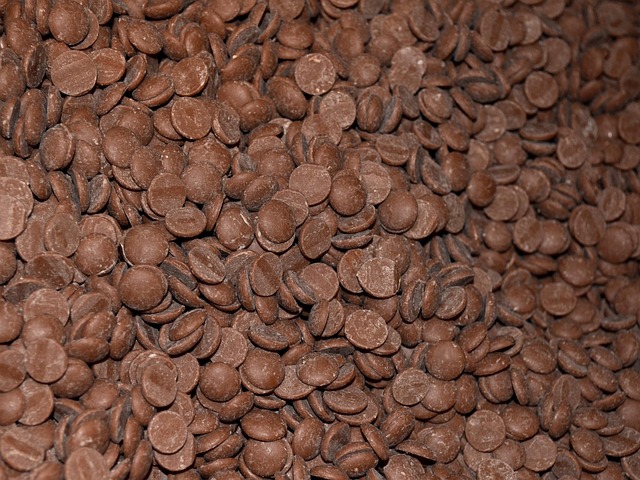
No — and the most important thing to know about chocolate chips is that they’re more dangerous than they look. A bag of chips reads as a small, incidental baking ingredient — nothing like a chocolate bar. But per gram, standard chocolate chips are closer to dark chocolate than to the mild milk-chocolate bar most people picture when they hear “chocolate.”
The toxin is the same theobromine covered in full on the chocolate hub. What this page adds is the calibration that catches people out.
The Surprising Part: Chocolate Chips Are Dark-Tier
Standard baking chips are semi-sweet, which sits in dark-chocolate territory — roughly 150 mg of theobromine per ounce (~5 mg/g), versus about 64 mg/oz for a milk chocolate bar (Merck’s figures for dark and milk). That’s more than double the theobromine per gram of the milk chocolate most people mentally file “chocolate” under.
Two things compound it:
- They’re eaten in quantity. Chips are small and pour easily — a spilled bag or a handful from the baking cupboard adds up fast.
- They read as harmless. Owners who’d rush a dog to the vet over a chocolate bar often shrug off “just some chocolate chips” — exactly backwards.
As a rough guide, a 10 kg (22 lb) dog reaches mild-toxicity signs from about 1–1.5 oz of standard chips — a modest handful — versus ~3 oz for a milk chocolate bar. Milk-chocolate chips are lower, and white-chocolate chips are negligible in theobromine (see white chocolate), but unless you know otherwise, treat chips as dark-tier. The chocolate hub has the full weight-by-weight table.
Where Dogs Encounter Chocolate Chips
- Baking — the classic scenario: a spilled bag on the floor, a bowl of cookie dough, chips left on the counter
- A dropped or chewed-open bag from the pantry
- Cookies, muffins, trail mix, and snack bars containing chips
Symptoms & What To Do
Signs begin within 1–4 hours (not delayed for days like allium poisoning): vomiting, diarrhoea, restlessness, a racing heart; at higher doses tremors and seizures.
Call your vet or a poison line with your dog’s weight, how many chips (or what size bag), and the type (dark/semi-sweet vs. milk vs. white). Don’t wait for symptoms. The chocolate hub carries the full dose math.
Frequently Asked Questions
This FAQ summarises general veterinary toxicology guidance. It’s informational only and not a substitute for advice from your own vet.
Aren’t chocolate chips less dangerous than a chocolate bar?
No — and this is the misconception worth correcting. Chocolate chips look like a mild baking ingredient, but standard chips are semi-sweet, which sits in dark-chocolate territory (~150 mg theobromine per ounce) — more than double a milk chocolate bar’s ~64 mg/oz. So a dog into a bag of chips has usually taken in more theobromine than the same dog nibbling a milk bar, not less. The “just chips” instinct underestimates the exposure; treat chips as dark chocolate.
My dog ate chocolate chips while I was baking — how worried should I be?
Take it seriously — more so than the “small ingredient” feeling suggests. Note how many (or the bag size), the type, and your dog’s weight, and call your vet or a poison line. A modest handful of standard chips is a real dose for a small or medium dog.
Are milk-chocolate chips safer than regular chips?
Somewhat — milk-chocolate chips carry less theobromine than semi-sweet or dark chips, and white-chocolate chips are negligible. But “standard” chips are semi-sweet/dark by default, so unless the bag says milk or white, assume dark-tier.
About This Guide
This guide was researched and written by Claire Donnelly for Is It Safe For My Dog?. We are not veterinarians. Each guide is compiled from published, publicly accessible veterinary and toxicology sources — for this page, the ASPCA, the American Kennel Club, PetMD, and the Merck Veterinary Manual — and cross-checked before publication. For the full theobromine dose math, see the chocolate reference page. This is general information; it does not replace a consultation with your vet.
Sources for the figures on this page
- Merck Veterinary Manual — Chocolate Toxicosis in Animals (dark chocolate 5.3–5.6 mg/g / ~150–160 mg/oz vs. milk 2.3 mg/g / ~64 mg/oz theobromine; mild-signs threshold ~20 mg/kg; within-hours onset)
- ASPCA / AKC / PetMD — chocolate classified toxic to dogs; theobromine and caffeine as the toxic methylxanthines; darker/more-concentrated chocolate the greater hazard (ASPCA — People Foods to Avoid; AKC — Chocolate; PetMD — Chocolate)
- Chocolate-chip composition — standard baking chips are semi-sweet, sitting between milk and dark chocolate and closest to dark; from published food-composition data, not a veterinary source
This page is informational only and does not constitute veterinary or medical advice.