Is Guacamole Safe for Dogs?
Guacamole is not safe to give dogs deliberately — but the reasons matter, and the popular framing gets them wrong in ways that obscure what actually needs attention.
This page calibrates two distinct hazard threads plus a separate physical hazard:
- Allium thread — onion (and often garlic): The primary concern. Onion is a standard guacamole ingredient present in meaningful amounts per serving. This is the same allium toxicity story as pesto, marinara sauce, and hummus.
- Avocado thread — fat and persin: Widely overstated for dogs. Avocado flesh is not an acute persin emergency in dogs the way it is for birds or horses. The real avocado-related concerns are the high fat content (pancreatitis risk) and the pit obstruction hazard.
- Pit — physical obstruction hazard: Independent of persin entirely. A swallowed avocado pit can cause intestinal obstruction requiring surgery.
Each thread has a different severity and a different action response. Conflating them — as most “guacamole is toxic” coverage does — obscures the calibration.
Hazard One: Onion and Garlic — the Primary Concern
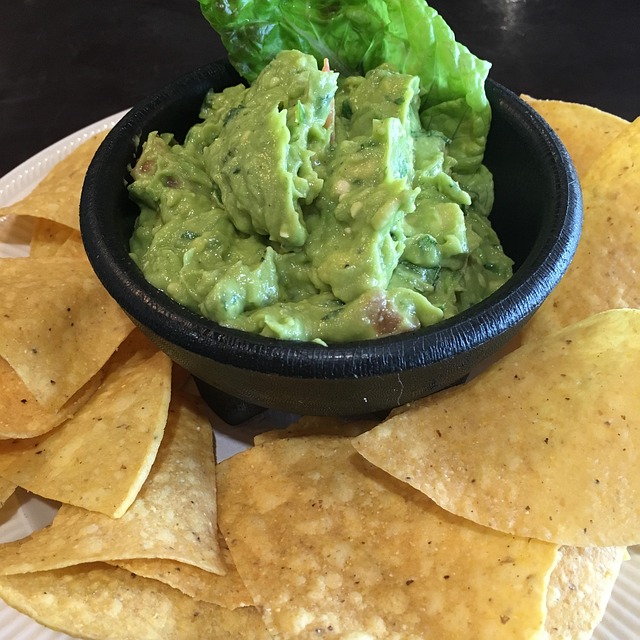
Onions are a standard ingredient in guacamole. Most recipes — homemade and commercial — include finely diced white or red onion; some add onion powder. Garlic is optional in classic recipes but common in many American-style versions.
Onion is an allium toxin. Its mechanism — oxidative damage to red blood cell membranes, Heinz body formation, haemolytic anaemia — is identical to garlic’s. The Merck Veterinary Manual gives the toxic dose for onions as 15–30 g/kg body weight, with all forms (raw, cooked, dehydrated, powdered) retaining full toxicity. Clinical signs are delayed 3–5 days after significant ingestion. This is the same hazard covered fully on the hummus and pesto pages.
How Much Onion Is in a Serving?
Standard recipes use 1/4 to 1/2 of a medium onion (approximately 175 g) per batch of about eight two-tablespoon servings:
| Recipe | Onion per 2-tbsp serving | % of lower threshold — 10 lb dog | % of lower threshold — 20 lb dog |
|---|---|---|---|
| Light (¼ onion/batch) | ~5.5 g | ~8% | ~4% |
| Standard (⅓ onion/batch) | ~7.3 g | ~11% | ~5% |
| Heavy (½ onion/batch) | ~11 g | ~16% | ~8% |
Merck onion threshold: 15–30 g/kg. Lower bound for a 10 lb (4.5 kg) dog: approximately 67.5 g fresh onion.
A single 2-tablespoon serving is well below the acute threshold for a healthy medium or large dog. The picture changes as portion size grows. Guacamole is a dip — realistic eating portions run 6–10 tablespoons in a sitting. At that scale, a 10 lb dog eating 8 tablespoons of a ½-onion recipe consumes roughly 44 g of fresh onion — about 65% of the lower acute threshold. That is a real allium exposure warranting a vet call.
Comparison to hummus: A standard hummus recipe delivers roughly 1.3 g of fresh garlic per 2-tablespoon serving. Garlic’s 3–5× greater potency means that’s equivalent to approximately 4–6 g of onion-equivalent per serving — comparable to guacamole’s light recipe. The per-serving allium loads are in a similar range, but guacamole portions tend to be larger and the onion in guacamole is typically present in greater absolute mass per serving than the garlic in hummus.
Garlic, If Present
One to two cloves per batch adds roughly 0.44–0.88 g of garlic per 2-tablespoon serving — approximately 3–6% of the lower acute garlic threshold for a 10 lb dog. This is additive to the onion load. Combined allium burden matters; don’t treat onion and garlic as independent concerns when both are present.
Commercial Guacamole
Commercial products typically use dehydrated onion or onion powder rather than fresh. Dehydrated and powdered alliums are more concentrated per gram than their fresh equivalents — the same principle VCA Hospitals confirms for garlic powder (one teaspoon equals approximately eight fresh cloves). The dose from commercial guacamole with onion powder is harder to estimate from the label than a fresh-onion recipe. When in doubt, treat it as delivering a higher allium load than the fresh-onion table above.
Hazard Two: Avocado — the Calibrated Picture
This is where the popular framing and the veterinary evidence diverge most significantly.
What the Sources Actually Say About Avocado and Dogs
ASPCA Animal Poison Control — Avocado plant entry: Lists Persin as the toxic principle and identifies the clinical signs as respiratory distress, heart failure, and oedema. The species listed as affected: horses. Dogs are not named as an at-risk species in this database entry. The ASPCA’s separate people-foods guidance adds that avocado is “primarily a problem for birds, rabbits, donkeys, horses and ruminants” — again, dogs are not among the listed species.
Merck Veterinary Manual — Avocado Toxicosis: States directly that “dogs seem relatively resistant compared with other species.” The clinical documentation for dogs amounts to a single case report of two dogs developing myocardial damage after avocado ingestion. The Merck entry’s primary focus is livestock and birds; dogs are a secondary note due to their apparent resistance.
American Kennel Club: States that “dogs are more tolerant and would typically need to eat large quantities of persin-containing parts to experience poisoning.” The AKC provides a per-body-weight guideline for avocado flesh rather than a blanket toxic classification.
The four-point honest position: We are not saying avocado is safe for dogs. We are saying the acute persin story — as it applies to dogs specifically — is substantially overstated in popular coverage. The respiratory distress and heart failure associated with avocado toxicosis are documented primarily for birds and horses. For dogs, the picture is different:
- Persin in the flesh: Dogs are far less sensitive than birds or horses. A dog eating guacamole has not consumed leaves, bark, or skin — the highest-persin plant parts. The flesh is meaningfully lower in persin. An acute persin toxicosis from avocado flesh, in a dog, is not supported by the body of veterinary evidence.
- High fat content: This is the real avocado concern for dogs. Avocado flesh is calorie-dense and fat-rich. A significant quantity of guacamole delivers a meaningful fat load, and in susceptible dogs, a sudden high-fat meal is a trigger for acute pancreatitis — which can range from GI distress to a serious condition requiring veterinary care.
- GI upset: Vomiting and diarrhoea are the clinical signs most consistently reported in dogs after avocado ingestion. This likely reflects the fat load and possibly mild GI irritation rather than acute persin toxicosis.
For the broader picture on avocado and dogs — including avocado oil and the full plant toxicology — see avocado. Note that the avocado page is currently being updated; this guacamole page reflects the calibrated source-level evidence.
The Pit — Physical Obstruction Hazard
The avocado pit is a hazard entirely separate from persin. The AKC is direct: avocado pits “are a serious choking hazard and can cause intestinal obstruction, especially in smaller dogs. This can become a medical emergency requiring surgery.”
A dog that has swallowed or partially chewed an avocado pit — regardless of guacamole — is a different situation from a dog that ate guacamole off a plate. The pit is not a toxicology case; it is a potential surgical emergency. Contact your vet immediately if a pit was swallowed.
Other Guacamole Ingredients
Lime juice: Standard in guacamole; primarily citric acid. At guacamole quantities, lime juice is a mild GI irritant in sensitive dogs, not a toxicological concern. The psoralen compounds that make the ASPCA classify citrus as toxic are concentrated in the rind and skin, not the juice.
Diced tomatoes: Often added in Tex-Mex-style guacamole. Ripe tomato flesh is non-toxic to dogs — all major veterinary sources confirm this. Not a concern.
Chili peppers and jalapeño: Common in spicier recipes. Capsaicin causes significant GI discomfort in dogs — vomiting, diarrhoea, abdominal pain. Not acutely toxic but unpleasant and worth noting.
Salt: Present in nearly all commercial guacamole. The sodium load at typical serving sizes is modest. For dogs on a vet-prescribed low-sodium diet, it is worth noting.
Cilantro: Occasionally mentioned as a concern online; the ASPCA does not classify cilantro as toxic to dogs. Not a primary concern.
Symptoms to Watch For
Allium exposure — haematological, delayed:
- Onset typically 3–5 days after ingestion; dog may appear normal initially
- Lethargy, weakness, reduced appetite
- Pale, white, or yellowish gums
- Rapid heart rate, laboured breathing
- Dark, red-tinged, or brownish urine
Fat load and GI upset:
- Vomiting, diarrhoea, abdominal discomfort — may begin within hours
- Loss of appetite, hunched posture, reluctance to move
- Persistent or severe vomiting: contact your vet (pancreatitis concern)
Pit ingestion:
- Retching, drooling, pawing at the mouth (choking)
- Vomiting that won’t stop, loss of appetite, lethargy (obstruction)
- If a pit was swallowed: contact your vet immediately — do not wait
What To Do If Your Dog Ate Guacamole
Dog licked a small amount off the floor: Low concern for a healthy medium or large dog. The allium and fat loads from a lick are minimal. Watch for GI symptoms over the next few hours and allium symptoms over the following week.
Dog ate a few tablespoons: Estimate the recipe or check the commercial product for onion content. For a medium or large dog, a few tablespoons is a manageable allium load; monitor for symptoms. For a small dog (under 10 lb): call your vet.
Dog ate a significant portion — half a bowl or more: Call your vet. The combined onion load from a realistic large serving is a meaningful allium exposure, and allium toxicosis has a 3–5 day delayed onset. Don’t wait for symptoms.
An avocado pit was swallowed: Contact your vet immediately. This is a potential obstruction emergency, not a persin question.
Commercial guacamole with onion powder: Treat the allium exposure as higher than the fresh-onion table suggests. A vet call is warranted for any significant quantity eaten by a small dog.
Regular exposure — guacamole as a snack habit: Stop it. Cumulative allium exposure is a real concern across repeated small servings, even when no individual incident appears harmful.
Frequently Asked Questions
This FAQ summarises general veterinary guidance. It’s informational only and not a substitute for advice from your own vet, who knows your dog.
Isn’t avocado the main danger in guacamole?
That’s the popular framing, but the veterinary evidence points the other way. Onion is the primary toxicological concern in guacamole for dogs. The acute persin story that circulates online is built on data from birds and horses — species genuinely far more sensitive to avocado than dogs are. The ASPCA’s plant database lists horses (not dogs) as the avocado-affected species; Merck states dogs are “relatively resistant.” The real avocado concern is the fat load and the pit obstruction hazard — both legitimate, but neither is the acute persin emergency that the headlines suggest.
My dog ate guacamole that had avocado pit pieces in it — what should I do?
Pit pieces are a physical hazard and need to be taken seriously regardless of the amount of guacamole consumed. Contact your vet and describe what was eaten. A large intact pit in a small dog is a potential surgical emergency; smaller fragments are still worth flagging.
Is homemade guacamole safer than store-bought?
Depends on the recipe. Homemade guacamole lets you know exactly what’s in it — and a recipe with less onion delivers a lower allium dose. Commercial guacamole typically uses dehydrated onion or onion powder, which is more concentrated per gram. If you know and control the recipe, homemade may be more predictable; it is not categorically safer if onion is present in significant amounts.
Does guacamole made without onion change the risk?
Yes, substantially. Garlic-free, onion-free guacamole would eliminate the primary toxicological hazard. What remains: the high fat load from avocado (pancreatitis risk for susceptible dogs), lime juice (mild GI irritant), salt, and chili if present. An onion-free, garlic-free guacamole isn’t appropriate as a regular addition to a dog’s diet because of the fat, but it’s a different risk profile from standard guacamole.
Why do most sites say guacamole is simply “toxic”?
The binary toxic/safe framing is easier to write and easier to share than a calibrated two-hazard picture. But it produces two specific failures: it overstates the avocado-flesh persin risk for dogs (which isn’t well-supported by the sources), and it understates the portion-size dependence of the onion risk (which escalates meaningfully above a lick-scale exposure). The goal here is to give owners information that actually helps them calibrate.
About This Guide
This guide was researched and written by Claire Donnelly for Is It Safe For My Dog?. We are not veterinarians. Each guide is compiled from published, publicly accessible veterinary and toxicology sources — for this page, the Merck Veterinary Manual (allium and avocado toxicosis), the ASPCA’s animal poison control database, and the American Kennel Club — and cross-checked before publication. This is general information to help you understand the risk; it does not replace a consultation with your vet.
Sources for the figures on this page
- Merck Veterinary Manual — Garlic and Onion (Allium spp.) Toxicosis in Animals (toxic dose: onion 15–30 g/kg body weight; garlic 3–5× more potent; all forms — raw, cooked, dehydrated, powdered — retain full toxicity; RBC oxidative damage begins within 24 hours; clinical haemolysis onset 3–5 days after exposure; mechanism: Heinz body formation, haemolytic anaemia; applied here for the onion dose table and allium action guidance)
- ASPCA Animal Poison Control — Garlic (classified Toxic to dogs; toxic principle: N-propyl disulfide; clinical signs: vomiting, breakdown of red blood cells — haemolytic anaemia, Heinz body anaemia — blood in urine, weakness, high heart rate, panting; applied here as the allium classification source for both garlic and, by extension, the broader allium family including onion)
- ASPCA Animal Poison Control — Avocado (toxic principle: Persin; species listed as affected in this database entry: horses; clinical signs listed — respiratory distress, heart failure, oedema — reflect the equine/avian presentation; dogs are not named as an at-risk species in this entry; the ASPCA’s people-foods guidance separately describes avocado as “primarily a problem for birds, rabbits, donkeys, horses and ruminants”; cited here as the official ASPCA classification with these distinctions noted transparently)
- American Kennel Club — Can Dogs Eat Avocado? (“dogs are more tolerant and would typically need to eat large quantities of persin-containing parts to experience poisoning”; pit described as “a serious choking hazard and can cause intestinal obstruction, especially in smaller dogs — this can become a medical emergency requiring surgery”; high fat content flagged for pancreatitis and weight gain risk; applied here as the dog-specific calibration source for the avocado thread)
- Merck Veterinary Manual — Avocado Toxicosis in Animals (“dogs seem relatively resistant compared with other species”; only a single case report of two dogs developing myocardial damage documented in veterinary literature; leaves identified as the most toxic plant part; GI foreign body obstruction from intact pits documented; page primarily addresses livestock and avian species; applied here as supporting evidence for the dogs-are-relatively-resistant calibration and the pit obstruction hazard)
- Onion per-serving estimates — based on typical guacamole recipe proportions (¼ to ½ medium onion per 8-serving batch); medium onion weight estimate of 175 g; Merck threshold applied as above; no single commercial product URL confirmed at time of writing
This page is informational only and does not constitute veterinary or medical advice.