Affiliate disclosure: This guide contains affiliate links. If you purchase via these links, we may earn a small commission at no extra cost to you. This never affects our safety assessments — see our Editorial Standards for how we work.
Recommendations on this page
- For preparedness: ARCA Pet First Aid Kit — a small investment for unexpected pet emergencies. View on Amazon →
- Further reading: The Forever Dog by Habib & Becker — a well-regarded reference on canine nutrition and longevity. View on Amazon →
Is Swiss Cheese Safe for Dogs?
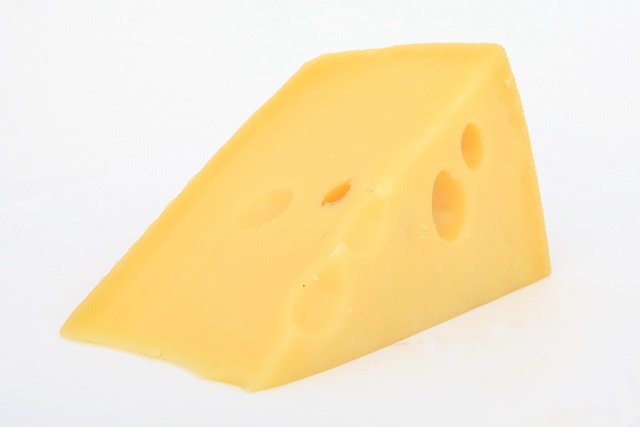
Swiss cheese isn’t toxic to dogs, and here’s the genuinely good news first: on the two things that usually make cheese a problem for dogs, Swiss is one of the better choices. It’s low in lactose and low in salt. That’s real, and it’s worth understanding before we get to the one concern that keeps it a Caution.
The Good News: Almost No Lactose, and Low Sodium
Two axes drive most of the caution around cheese for dogs — lactose (many dogs don’t digest it well) and sodium (a lot of cheese is salty). Swiss lands well on both:
- Lactose — almost none. Swiss is a hard, aged cheese, and the bacteria that ripen it — the same ones that produce its famous holes — consume the milk sugar as it matures. What’s left is a trace: on the order of 0.04 g of lactose per serving, far below fresh cheeses and among the lowest of any cheese. This matters for dogs the same way it matters for lactose-intolerant people — the mechanism is identical — so a lactose-sensitive dog will typically tolerate Swiss better than most cheeses. Unlike some human cheese-marketing claims that don’t transfer to dogs, this one genuinely does: less lactose means less of the gas-and-loose-stools problem.
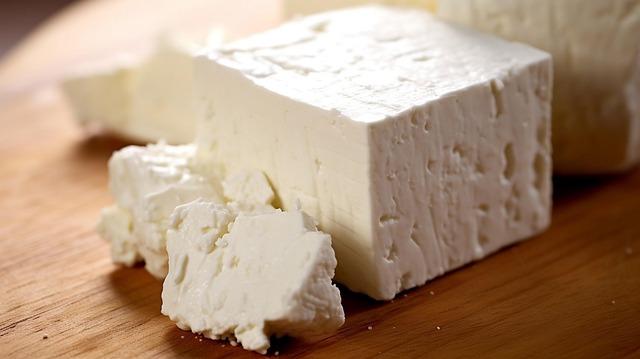
- Sodium — low. Swiss carries roughly 55 mg of sodium per ounce. To put that in the context of cheeses we’ve already calibrated, that’s about one-sixth of feta (~312 mg/oz) and comfortably below most hard cheeses. Swiss simply isn’t a salt-cured or brined cheese, so salt isn’t the story here.
So if you’re going to share a little cheese with a dog — especially a lactose-sensitive one — Swiss is a sensible pick on these two counts.
Swiss Is the “Salt Isn’t the Story” Cheese
It’s worth placing Swiss deliberately against the cheeses where salt is the story. We’ve described an “inherently salty” group — feta (~312 mg/oz), ricotta salata (~400 mg/oz), and, outside dairy, capers — foods where the salt is a defining, inseparable part of the product.
Swiss is the opposite case. It’s the natural low-sodium counterpoint to that group: a cheese where you don’t have to think much about salt. So if you’ve read the feta page and come away wary of cheese-and-salt, Swiss is the reassuring other end of the shelf — the concern there simply doesn’t carry over here.
The One Real Concern: Fat
Here’s where the reassurance stops, and it’s important to be just as clear about this as about the good news: Swiss cheese is high in fat. It’s a full-fat hard cheese at roughly 30% fat — about 9 grams per ounce — right alongside cheddar, and higher than either feta or ricotta.
Fat is not a minor footnote on this site. A fatty food is a genuine trigger for pancreatitis — a painful, potentially serious inflammation of the pancreas — particularly in small dogs, overweight dogs, and breeds prone to it. A single small cube of Swiss won’t do that; a dog that gets into a large amount of any rich, fatty cheese can. We cover the fat-and-pancreatitis mechanism in full on the bacon page, and it applies to Swiss unchanged. Beyond pancreatitis, cheese is simply calorie-dense — an easy source of unhelpful weight if it becomes a habit.
Why Low Lactose and Low Salt Don’t Add Up to “Safe”
This is worth stating plainly, because it’s the whole reason Swiss stays a Caution rather than tipping to Safe.
It’s tempting to reason that if the two usual cheese concerns — lactose and salt — both come out near zero, the cheese should be in the clear. But that’s not how risk adds up. Fat is an independent concern, and a genuinely serious one — pancreatitis is among the more consequential problems this site covers. It doesn’t get smaller because the lactose and sodium are low; it stands entirely on its own.
This is the difference between Swiss and a food like apple, which we do rate Safe. With apple, we looked at every concern — cyanide from the seeds, sugar — and each one resolved: it evaporated on close inspection, leaving nothing independently serious behind. With Swiss, two concerns resolve, but a third — fat — does not. One sufficient, independent reason for caution is enough to hold the rating there, no matter how well the cheese does on everything else. Two green lights don’t cancel a red one.
So: Swiss is a genuinely good cheese to choose if you’re sharing a little. It just has to stay little.
A Note on Fondue
Most of the time Swiss turns up simply — a slice in a sandwich, melted on a burger, a cube off a board. One preparation is worth a flag, though: Swiss fondue. Classic fondue is melted Swiss cheese loosened with white wine and flavoured with garlic (a clove rubbed round the pot, sometimes more). Both of those are concerns a plain slice of Swiss isn’t — garlic is genuinely toxic to dogs (an allium), and wine brings alcohol, which dogs shouldn’t have at all. As with other dishes on the site, that’s the fondue, not the cheese — but if a dog laps up fondue, you’re weighing the garlic and alcohol on top of the fat, not just the Swiss.
Symptoms to Watch For
From the fat (a large or rich amount of Swiss):
- Vomiting, diarrhoea, gas, abdominal discomfort
- After a genuinely fatty amount, watch for pancreatitis signs over 24–72 hours — repeated vomiting, a hunched or painful posture, marked lethargy, loss of appetite, a swollen or tender belly. These warrant a prompt vet call.
From lactose (less likely with Swiss, but possible in very sensitive dogs):
- Loose stools or gas a few hours after eating
From fondue (garlic and alcohol):
- Garlic (allium — often delayed 3–5 days): lethargy, weakness, pale gums, reddish or brown urine
- Alcohol: wobbliness, disorientation, vomiting — call your vet promptly
For preparedness
ARCA Pet First Aid Kit
A small cube of Swiss is a low-concern treat — but the scenarios that do matter (a dog into a big block of cheese, or a bowl of garlicky, wine-laced fondue) are exactly the kind worth being ready for. A first aid kit is a small, sensible bit of preparedness while you get to your vet.
View on Amazon →What To Do
- A small cube or a bit of a slice, healthy dog: low concern — and on lactose and salt, Swiss is one of the gentler cheeses to pick. Keep it small and occasional because of the fat.
- A lactose-sensitive dog: Swiss is a reasonable cheese to try in a small amount, since it’s very low in lactose — but still watch for loose stools, as individual tolerance varies.
- A large amount (a stolen block or a pile of slices): monitor for GI upset and, given the fat, pancreatitis signs over the next 1–3 days — sooner to the vet for a small dog or one with a history of pancreatitis.
- Fondue: weigh the garlic and alcohol, not just the cheese — treat a meaningful amount as an allium exposure plus an alcohol one, and call your vet.
- Using cheese for pills or training: a tiny piece of Swiss is a fine low-lactose choice — just count it in the day’s treats and keep the portions little.
Frequently Asked Questions
This FAQ summarises general veterinary and nutrition guidance. It’s informational only and not a substitute for advice from your own vet, who knows your dog.
Is Swiss cheese safe for dogs?
In a small amount, for most dogs, yes — and it’s one of the better cheeses to choose, because it’s very low in lactose and low in salt. It stays a “caution” rather than fully safe because, like most cheese, it’s high in fat, and fatty food can trigger pancreatitis in susceptible dogs. So a small cube is a good, gentle treat; a large amount is a real fat load. Keep it little.
Is Swiss cheese good for lactose-intolerant dogs?
Comparatively, yes. Swiss is an aged cheese with almost no lactose left — the ripening bacteria consume it — so a lactose-sensitive dog will usually tolerate a small piece of Swiss better than a fresher, higher-lactose cheese. It’s genuinely one of the gentler cheeses on that front. The catch is that it’s still high in fat, so “better tolerated” doesn’t mean “unlimited” — keep the amount small.
If Swiss is low in lactose and low in salt, why isn’t it Safe?
Because fat is a separate concern, and a serious one. Low lactose and low sodium are genuinely good news, but they don’t cancel out the fact that Swiss is about 30% fat — and fatty food is a real trigger for pancreatitis, one of the more consequential problems for dogs. Two concerns resolving to near-zero doesn’t erase a third that stands on its own. That single sufficient reason keeps Swiss at Caution, even though it does well on everything else.
My dog ate a lot of Swiss cheese — what should I do?
Watch for stomach upset, and — because of the fat — keep an eye out for pancreatitis signs over the next one to three days: repeated vomiting, a hunched posture, lethargy, loss of appetite, a tender belly. A small dog, an overweight dog, or one with a history of pancreatitis is more at risk, so call your vet sooner in those cases. The low lactose means digestive upset is somewhat less likely than with other cheeses, but the fat is the thing to monitor.
About This Guide
This guide was researched and written by Claire Donnelly for Is It Safe For My Dog?. We are not veterinarians. Each guide is compiled from published, publicly accessible veterinary and toxicology sources — for this page, the American Kennel Club, PetMD, VCA Hospitals, and the ASPCA — and cross-checked before publication. Because neither the AKC nor PetMD publishes a Swiss-cheese-specific article, we apply their general cheese guidance to Swiss and say so openly, with the fat-and-pancreatitis concern anchored to veterinary sources. This is general information; it does not replace a consultation with your vet.
Sources for the figures on this page
- American Kennel Club — Can Dogs Eat Cheese? (cheese not toxic but a food of caution; many dogs are lactose intolerant; cheese is high in fat and can carry added salt — applied here to Swiss, no AKC Swiss-specific page existing)
- PetMD — Can Dogs Eat Cheese? (cheese, lactose tolerance, and fat in dogs; plain-versus-processed guidance; applied here as the general-cheese analog for Swiss)
- VCA Hospitals — Pancreatitis in Dogs (dietary fat as a pancreatitis trigger; risk factors including small breeds and prior episodes; the anchor for Swiss’s fat concern)
- ASPCA Animal Poison Control — People Foods to Avoid Feeding Your Pets (fatty foods associated with GI upset and pancreatitis; garlic listed as a hazard — relevant to fondue)
- Composition figures — Swiss cheese ~0.04 g lactose per serving (aged, near-zero), ~55 mg sodium per ounce (low; ~one-sixth of feta), and ~9 g fat per ounce (~30%); from published food-composition data, used to position Swiss on the cheese spectrum
This page is informational only and does not constitute veterinary or medical advice.