Affiliate disclosure: This guide contains affiliate links. If you purchase via these links, we may earn a small commission at no extra cost to you. This never affects our safety assessments — see our Editorial Standards for how we work.
Recommendations on this page
- For preparedness: ARCA Pet First Aid Kit — a small investment for unexpected pet emergencies. View on Amazon →
- Further reading: The Forever Dog by Habib & Becker — a well-regarded reference on canine nutrition and longevity. View on Amazon →
Is Feta Cheese Safe for Dogs?
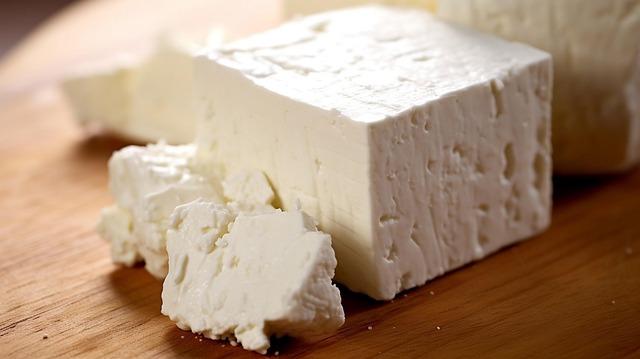
Feta isn’t toxic to dogs — but of all the dairy we’ve calibrated, it sits at the salty end of the family. If buttermilk is the gentle pole of the dairy cluster (low fat, low lactose), feta is close to the opposite one: it’s a brined cheese, sold and stored in salt, and sodium is the real story here.
One thing to correct up front, because it’s a common claim and it was on the earlier version of this very page: feta is often described as “high in lactose,” and that’s not right. Feta is actually fairly low in lactose — the brining and aging see to that — so the milk-sugar isn’t the concern it is with milk or yogurt. The honest order of concern for feta is salt first, fat second, and lactose a distant third. Let’s take them in that order, then cover the two allium catches that genuinely apply.
Salt: the Lead Concern — and Feta Is “Inherently Salty”
Feta carries roughly 312 mg of sodium per ounce. To put that in cluster terms, that’s about three times as salty as milk — and it lands right next to ricotta salata (~400 mg/oz), the salt-cured cheese we flagged on the ricotta page. Feta is genuinely one of the saltiest things in the dairy aisle.
Here’s the framing that ties feta to a pattern the site keeps meeting: feta is inherently salty. There’s no “low-salt plain feta” to reach for, because the brine is what makes feta feta — take the salt away and it isn’t the same cheese. That puts it in a small, recognisable group we’ve now named across several pages: the inherently-salty foods, where the salt isn’t an add-on you can leave out but a defining part of the product. Its cluster-mates are ricotta salata (the dairy sibling) and capers (the non-dairy one — a brined bud that’s salty for the same structural reason). It’s the same separable-vs-inherent distinction that keeps these foods at Caution: you can core an apple, but you can’t de-salt a feta.
Now the calibration, because “saltiest in the aisle” still needs a sense of scale. Veterinary toxicology (Merck) puts genuine salt toxicosis in the range of 2–3 grams of salt per kilogram of body weight — a threshold a dog won’t reach from a crumble of feta on a dropped forkful. What feta’s saltiness realistically means is more everyday: a meaningful serving is a real sodium load, so it’s worth increased thirst, GI upset, and portion-awareness, especially for small dogs and any dog on a vet-prescribed low-sodium diet. Feta is eaten in bigger pieces than a caper — cubed into salads, crumbled by the handful — so the “used in tiny amounts” reassurance that softened the caper page applies less here. See the salt page for the full sodium picture.
Fat: the Secondary Concern
After salt comes fat. Whole-milk feta is about 21% fat — moderate-to-high, in the neighbourhood of sour cream and above fresh ricotta (5–12%). A small crumble is minor, but a large, fatty serving carries the usual dairy-fat caveat: GI upset, and — for small or predisposed dogs — a pancreatitis risk at genuinely rich quantities. It’s a secondary note here, not the headline, but it stacks on top of the salt rather than replacing it. (For cheese in general, see the cheese page.)
The Two Allium Catches — Both Genuine
Feta comes with two garlic-and-onion angles that are not a stretch, so they get real weight rather than a passing mention.
1. Garlic-herb feta — allium mixed into the cheese itself
Garlic-herb feta is a common, widely-sold commercial product — Athenos Garlic & Herb Feta, for one, is stocked across major grocery chains. This matters because the garlic is blended directly into the cheese, not sitting in a sauce nearby. That puts it in the strongest allium tier on the site — the same direct-in-product category as sour cream-and-onion dip, not the weaker sauce-adjacent case. Garlic (and garlic powder, which is more concentrated than the fresh clove) is genuinely toxic to dogs, damaging red blood cells in a dose-dependent, often delayed way. So a dog eating a chunk of garlic-herb feta is having a real allium exposure on top of the salt — check the label, because “feta” on its own and “garlic-herb feta” are different risk questions.
2. Greek salad — the red onion is a standard ingredient
The dish feta turns up in most is Greek salad, and here the catch is the red onion — which is not an optional garnish but a traditional, standard ingredient of the salad, sliced right in alongside the feta, cucumber, tomato, and olives. That makes it a direct-in-dish onion exposure, the same tier as the onion in coleslaw — not a trace in a dressing. Onion is toxic to dogs by the same mechanism as garlic. So a dog that hoovers up a bowl of Greek salad is getting onion plus a very salty cheese — judge it by the amount of onion, and watch over the following days if it was a meaningful quantity.
Spanakopita and Other Feta Dishes
Beyond the salad, feta bakes into spanakopita (the Greek spinach-and-feta pastry): layers of phyllo, butter, spinach, feta, and usually onion. As with other baked dishes on the site, the feta is one salty-fatty component among several — the concerns are the butter-rich fat, the salt, and any onion in the filling, rather than the feta alone. A small bite of plain spanakopita is unlikely to harm a healthy dog, but an onion-heavy filling makes it an allium question. The rule that keeps recurring: when feta is baked into something, read the dish by its other ingredients.
One Nice Exception: Watermelon and Feta
Worth ending the food-combos on a calmer note. Watermelon-feta salad is a popular summer dish, and here the two halves land very differently for a dog: watermelon is genuinely dog-safe (seedless, rind removed), a hydrating low-calorie fruit — while the feta is the salty part. So if your dog steals from a watermelon-feta bowl, the fruit is fine and the cheese is the only thing to think about — a reassuring inversion of the usual “the dish hides a problem” pattern. The watermelon’s the treat; the feta’s just salt.
Symptoms to Watch For
From the salt or fat (a meaningful serving of plain feta):
- Increased thirst and urination, vomiting, diarrhoea, gas, abdominal discomfort
- After a large, fatty amount, watch for pancreatitis signs over 24–72 hours — repeated vomiting, a hunched or painful posture, marked lethargy, loss of appetite
- After a genuinely large salty amount in a small dog, the more serious sodium signs — marked lethargy, wobbliness or tremors — warrant a prompt vet call
From garlic-herb feta or a Greek salad’s onion (allium — often delayed 3–5 days):
- Lethargy, weakness, pale gums, reddish or brown urine, reduced appetite
For preparedness
ARCA Pet First Aid Kit
A crumble of plain feta is a minor thing — but the scenarios that do matter (a dog into a bowl of garlic-herb feta, or an onion-heavy Greek salad) are the kind worth being ready for. A first aid kit is a small, sensible bit of preparedness while you get to your vet.
View on Amazon →What To Do
- A small crumble of plain feta, healthy dog: low concern. Mind the salt; keep it occasional and small; make sure fresh water’s available.
- A large amount of plain feta: monitor for GI upset and thirst; for a small dog, be mindful of the sodium, and watch for pancreatitis signs over 1–3 days given the fat.
- Garlic-herb (or other flavoured) feta: treat a meaningful amount as an allium exposure — check the label, and watch over the next 3–5 days.
- A Greek salad: the red onion is the thing to weigh, not the feta — treat a meaningful amount as an allium exposure.
- A low-sodium diet: feta is one of the saltier dairy choices — skip it and pick something gentler like a little plain ricotta or plain buttermilk.
Frequently Asked Questions
This FAQ summarises general veterinary and nutrition guidance. It’s informational only and not a substitute for advice from your own vet, who knows your dog.
Is feta cheese safe for dogs?
In a small amount of plain feta, it won’t poison a healthy dog — but it’s a salty, fatty treat rather than a good one. Feta is a brined cheese at around 312 mg of sodium an ounce, roughly three times as salty as milk, so it’s best kept to the occasional small crumble, and skipped for small dogs or those on a low-sodium diet. Watch out for garlic-herb feta and feta in a Greek salad, where garlic or onion is the bigger concern.
Isn’t feta high in lactose?
Not really — that’s a common misconception (it was even on the earlier version of this page). Feta’s brining and aging leave it fairly low in lactose, lower than milk or yogurt, so the milk-sugar isn’t the main issue. The real concern with feta is its salt, followed by its fat. Lactose-sensitive dogs may still get loose stools from any dairy, but feta isn’t a high-lactose food.
My dog ate garlic-herb feta — should I worry?
Take it more seriously than plain feta. Garlic-herb feta has garlic blended right into the cheese, and garlic is genuinely toxic to dogs — it damages red blood cells in a dose-dependent, often delayed way. A tiny taste is unlikely to cause harm, but a meaningful amount is a real allium exposure: watch for lethargy, weakness, pale gums, or reddish urine over the next 3–5 days, and call your vet if the amount was significant or symptoms appear.
Can dogs eat Greek salad?
Best not — because of the red onion, not the feta. Onion is a standard ingredient in Greek salad and is toxic to dogs, so a bowl of it is an allium exposure on top of a very salty cheese. A stray cucumber or tomato is harmless, but don’t share the salad as a whole; if your dog ate a meaningful amount, watch for the onion signs over the following days.
About This Guide
This guide was researched and written by Claire Donnelly for Is It Safe For My Dog?. We are not veterinarians. Each guide is compiled from published, publicly accessible veterinary and toxicology sources — for this page, the American Kennel Club, PetMD, VCA Hospitals, the ASPCA, and the Merck Veterinary Manual — and cross-checked before publication. Because neither the AKC nor PetMD publishes a feta-specific article, we apply their general cheese guidance to feta and say so openly, with the sodium figures anchored to veterinary toxicology and the allium guidance applied to garlic-herb feta and the onion in Greek salad. This is general information; it does not replace a consultation with your vet.
Sources for the figures on this page
- American Kennel Club — Can Dogs Eat Cheese? (cheese not toxic but a food of caution; many dogs are lactose intolerant; cheese high in fat and can carry added salt/seasonings — applied here to feta, no AKC feta page existing)
- PetMD — Can Dogs Eat Cheese? (cheese, lactose tolerance, and fat in dogs; plain-versus-seasoned guidance; applied here as the general-cheese analog for feta)
- VCA Hospitals — Onion, Garlic, Chive, and Leek Toxicity in Dogs (onion and garlic classified toxic to dogs; applied to the garlic in garlic-herb feta and the onion in Greek salad)
- ASPCA Animal Poison Control — People Foods to Avoid Feeding Your Pets (excess salt cautioned; onion and garlic listed as hazards; fatty foods associated with GI upset)
- Merck Veterinary Manual — Salt Toxicosis in Animals (sodium toxicosis in the range of ~2–3 g salt per kg body weight; used to scale feta’s saltiness against a genuine toxic threshold)
- Composition figures — feta ~312 mg sodium per ounce, ~21% fat (whole-milk), and relatively low lactose (~4 g/100 g); ricotta salata ~400 mg sodium per ounce for comparison; from published food-composition data, used to position feta on the dairy spectrum
This page is informational only and does not constitute veterinary or medical advice.