Is Worcestershire Sauce Safe for Dogs?
Worcestershire sauce carries the standard allium-cluster warning — it contains onions and garlic, and those are genuine toxins for dogs. The honest calibration is more nuanced than that reputation implies, and this page leads with the math rather than the reputation.
The key finding: Worcestershire is the lowest-allium-concern condiment in this category by a significant margin. Per teaspoon — the realistic unit of use — the combined onion and garlic content delivers well under 0.3% of the lower acute threshold for a 10 lb dog. A culinary dash in food is essentially negligible. The scenario that warrants attention is a dog that drank directly from the bottle, and even then sodium is the leading concern rather than alliums.
The sister product with the closest calibration profile is soy sauce — both are concentrated salt-and-flavour condiments used in small quantities, and both are more of a sodium concern at scale than an allium concern at typical use.
The Allium Content: What the Per-Teaspoon Math Shows
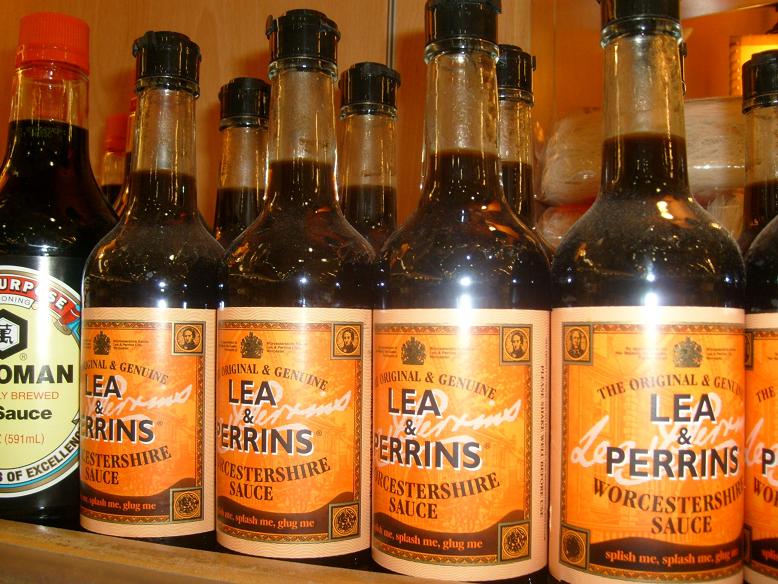
Worcestershire sauce’s standard ingredient list — confirmed for Lea & Perrins via Open Food Facts product data — runs: vinegar, molasses, sugar, water, salt, anchovies, tamarind extract, onions, garlic, spice, flavourings. Onion and garlic appear 8th and 9th in a roughly eleven-ingredient list, after vinegar, molasses, sugar, salt, anchovies, and tamarind in descending-weight order.
Because exact ingredient percentages are not disclosed on product labels, the estimates below are based on ingredient-list position — a reasonable proxy for relative proportion, not a confirmed measurement:
| Allium % estimate | Onion+garlic per 1-tsp serving (~5.9 g) | % of lower acute threshold — 10 lb dog |
|---|---|---|
| 1% | ~0.06 g | ~0.09% |
| 2% | ~0.12 g | ~0.18% |
| 3% | ~0.18 g | ~0.27% |
Derived from Merck: onion lower acute threshold 15 g/kg body weight; 10 lb (4.5 kg) dog threshold ≈ 67.5 g fresh onion.
For context: a standard hummus recipe delivers approximately 1.3 g of garlic per 2-tablespoon serving — garlic’s 3–5× greater potency makes that roughly 4–6 g of onion-equivalent per serving. A Worcestershire teaspoon at the liberal 3% estimate delivers ~0.18 g. The gap between Worcestershire and other allium-bearing condiments is large.
Some commercial variants may substitute garlic powder or onion powder for whole ingredients. Powdered alliums are more concentrated per gram — VCA Hospitals notes that one teaspoon of garlic powder is equivalent to approximately eight fresh cloves. In practice this is unlikely to materially change the per-teaspoon allium picture given the small percentage involved, but it means the dose estimate carries inherent uncertainty for any specific product.
The allium mechanism — oxidative red blood cell damage, Heinz body formation, haemolytic anaemia, onset delayed 3–5 days — is the same as for every condiment in this cluster. It is covered in full on the pesto page. What’s worth stating here is that the mechanism applies to Worcestershire in principle, but the per-use dose places it in a different bracket from marinara sauce, hummus, or pesto. The cumulative-exposure concern applies to regular feeding, not to a dash in cooking.
The Sodium Picture
Lea & Perrins Worcestershire sauce contains approximately 57 mg of sodium per 5 ml teaspoon — confirmed via Open Food Facts product data for the UK formulation. The US formulation runs slightly higher at approximately 65 mg per teaspoon, based on typical product labelling without a confirmed manufacturer URL. Per tablespoon: approximately 170–195 mg.
This is lower per teaspoon than ketchup per tablespoon (~160 mg) and far lower than commercial marinara per half-cup (~470 mg). At culinary use — a teaspoon in a sauce, a splash on meat — the sodium load for a healthy dog is not a concern. For dogs on a vet-prescribed low-sodium diet, it is worth noting. See the salt page for sodium threshold context.
Two Scenarios: Culinary Use vs. Bottle Access
Culinary use — a dash in food, a lick from the plate
A teaspoon in a marinade, a splash in a stew, a dog licking a plate or spoon — these represent typical exposure. The allium load is under 0.2 g combined, the sodium is 57–65 mg, and neither figure warrants concern in a healthy adult dog.
No vet call needed. Make water available, note it happened, and don’t make it a deliberate habit. The cumulative allium concern is real in principle; at Worcestershire quantities it is the lowest-priority concern in the cluster.
Bottle access — a dog that drank a meaningful quantity
A standard Lea & Perrins bottle is 5 fl oz (150 ml / approximately 30 teaspoons). If a dog accessed and drank a substantial portion, the picture changes — primarily because of sodium.
A full 150 ml bottle delivers approximately 1,710–1,950 mg of sodium alongside an estimated 1.8–5.4 g of combined onion and garlic. At this scale:
- Sodium is the leading concern. 1,700+ mg in a single ingestion is a meaningful load for any dog, particularly smaller ones. Sodium toxicity signs include vomiting, diarrhoea, excessive thirst, and in serious cases muscle tremors or seizures.
- The allium load at 1.8–5.4 g represents roughly 3–8% of the lower acute onion threshold for a 10 lb dog — still below the acute crisis level but no longer negligible. The delayed-onset principle applies: a dog that seems fine the same day is not necessarily clear.
If your dog drank a significant quantity from a Worcestershire bottle: call your vet. Not an acute persin-style emergency, but the combined sodium and allium load at that volume warrants professional guidance.
Other Ingredients — Not Toxicological Concerns
Anchovies: Fermented anchovy paste is a standard Worcestershire ingredient and not a toxicological concern for dogs. The main fish-related hazards for dogs — mercury in large predatory fish, bones, raw salmon disease — don’t apply to processed fermented fish in a manufactured sauce. No major veterinary source flags anchovies in condiments as a hazard.
Tamarind: A mildly acidic fruit concentrate. No veterinary toxicology source identifies tamarind as a concern for dogs at condiment quantities.
Vinegar: Acetic acid; mildly acidic. Not a toxicological concern. May contribute to GI upset in sensitive dogs if consumed in large amounts, irrelevant at a teaspoon.
Sugar and molasses: Present as flavour components. At the amounts found in a teaspoon of Worcestershire, neither is a meaningful concern. Occasional use in cooking is not a problem.
Worcestershire and Soy Sauce — a Calibration Pair
Soy sauce is the closest sister condiment: both are deeply concentrated, strongly flavoured, and used in small quantities. Both are more of a sodium concern at scale than an allium concern at typical use. The differences worth noting: soy sauce’s sodium concentration is far higher (roughly 900–1,000 mg per tablespoon versus ~170–195 mg for Worcestershire), making the bottle-access scenario more acutely serious for soy sauce. On the allium axis, Worcestershire is the more consistent concern since onion and garlic are always present; traditional soy sauce does not typically contain alliums. The calibration principle is the same: fine at a culinary dash, worth a vet call at bottle scale.
Symptoms to Watch For
From allium exposure — cumulative or large quantity:
- Onset typically 3–5 days after significant ingestion — dog may appear normal initially
- Lethargy, weakness, reduced appetite
- Pale, white, or yellowish gums
- Rapid heart rate, laboured breathing
- Dark, reddish, or brownish urine
At culinary-use quantities, allium symptoms from Worcestershire are not expected. This track applies to the bottle-access scenario or sustained regular feeding over time.
From sodium at scale — bottle-access scenario:
- Vomiting, diarrhoea, excessive thirst and urination
- Lethargy, muscle weakness or tremors in more serious cases
- Seek veterinary guidance if a significant quantity was consumed
What To Do
Dog licked a plate, spoon, or countertop with Worcestershire: No concern. Make water available; no action needed.
Dog ate food seasoned with Worcestershire (a teaspoon or less in cooking): Negligible allium and sodium loads. No vet call needed for a healthy adult dog.
Dog accessed the bottle and drank a meaningful amount: Call your vet. Sodium is the primary concern at that volume; vet can advise based on the dog’s size and the quantity consumed.
Worcestershire as a regular addition to a dog’s food: Stop it. The per-use amounts are too small to cause acute harm, but the cumulative allium principle applies and there is no benefit to the dog.
Frequently Asked Questions
This FAQ summarises general veterinary guidance. It’s informational only and not a substitute for advice from your own vet, who knows your dog.
My dog licked Worcestershire sauce off the counter — should I be worried?
No, for a healthy adult dog. The allium content in a lick-scale exposure is well under any meaningful threshold, and the sodium is negligible at that quantity. Monitor for any GI upset over the next few hours; no vet call is needed.
Isn’t Worcestershire very concentrated? Shouldn’t a small amount still be dangerous?
This is the framing that causes the most confusion. Worcestershire is concentrated in flavour, but the allium fraction within it is low — onion and garlic appear after vinegar, molasses, sugar, salt, anchovies, and tamarind in the ingredient list. Even a full teaspoon delivers only an estimated 0.06–0.18 g of combined onion and garlic. Concentration in flavour does not mean concentration in toxic ingredients.
My dog ate food marinated in Worcestershire sauce — is that different?
A marinade distributes a small amount of Worcestershire across a larger portion of food. The allium and sodium loads per portion of cooked food are even lower than a direct teaspoon. Negligible exposure for a healthy adult dog.
Is Worcestershire safer than soy sauce for dogs?
On sodium: yes, significantly — Worcestershire delivers roughly 57–65 mg per teaspoon versus soy sauce’s ~900–1,000 mg per tablespoon. On alliums: Worcestershire is the more consistent concern, since onion and garlic are always present. Both are calibrated the same way: a culinary dash is fine; bottle-scale access warrants a vet call.
About This Guide
This guide was researched and written by Claire Donnelly for Is It Safe For My Dog?. We are not veterinarians. Each guide is compiled from published, publicly accessible veterinary and toxicology sources — for this page, the Merck Veterinary Manual, the ASPCA, and VCA Hospitals — and cross-checked before publication. This is general information to help you understand the risk; it does not replace a consultation with your vet.
Sources for the figures on this page
- Merck Veterinary Manual — Garlic and Onion (Allium spp.) Toxicosis in Animals (toxic dose: onion 15–30 g/kg body weight; garlic 3–5× more potent; all forms — raw, cooked, dehydrated, powdered — retain full toxicity; onset 3–5 days after exposure; mechanism: oxidative RBC damage, Heinz body formation, haemolytic anaemia; applied here as the basis for the per-teaspoon dose table and allium threshold calculations)
- ASPCA Animal Poison Control — Garlic (classified Toxic to dogs; toxic principle: N-propyl disulfide; clinical signs: vomiting, breakdown of red blood cells — haemolytic anaemia, Heinz body anaemia — blood in urine, weakness, high heart rate, panting; applied here as the allium classification source for both garlic and onion as members of the same allium family)
- ASPCA Animal Poison Control — People Foods to Avoid Feeding Your Pets (“Allium species can cause gastrointestinal irritation and red blood cell damage, which can lead to anaemia; although cats are more susceptible, dogs are also at risk depending on the amount ingested”; applied here as the ASPCA’s explicit statement on both onion and garlic for dogs)
- VCA Hospitals — Onion, Garlic, Chive, and Leek Toxicity in Dogs (garlic powder potency: 1 tsp = approximately 8 fresh cloves; oxidative RBC damage mechanism; clinical onset may take several days; full clinical sign list including GI and haematological signs; applied here for allium mechanism, onset context, and garlic-powder concentration note)
- Sodium and ingredient figures — Lea & Perrins Worcestershire sauce: approximately 57 mg sodium per 5 ml teaspoon, ingredient order confirmed via Open Food Facts product data (UK formulation); US formulation approximately 65 mg per teaspoon based on typical product labelling without a confirmed manufacturer URL; allium percentage estimates based on ingredient-list position in descending-weight order, not disclosed product data
This page is informational only and does not constitute veterinary or medical advice.