Are Green Onions Safe for Dogs?
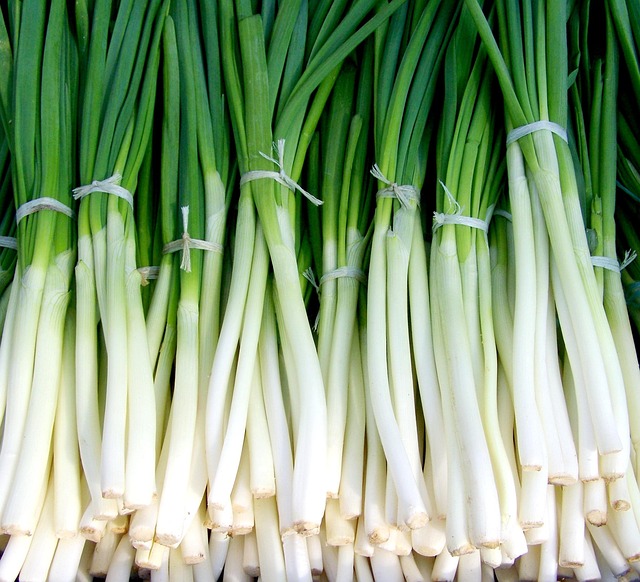
No. Green onions — also called scallions or spring onions — are toxic to dogs. They are literally young onion plants, members of the same Allium family as onions, garlic, chives, and leeks, and they carry the same hazard.
As with the rest of the family, this is an accurate “toxic” label rather than an overstated one — the allium group is a genuine, well-documented blood toxin, unlike foods whose reputations the evidence doesn’t support (oregano, lemon, avocado).
The Nuance Most Content Misses: Milder Per Gram, but Eaten in Larger Amounts
This is the point worth getting right about green onions, because it cuts both ways.
Green onions are somewhat milder in allium concentration per gram than a mature bulb onion. Read casually, that sounds like they’re “less dangerous.”
But dose is amount × concentration — and green onions are usually eaten raw and in larger quantities. They’re not a background ingredient softened by cooking; they’re piled fresh onto tacos, stirred through salads, scattered over stir-fries, ramen, noodles, and dips as a generous garnish. A dog that cleans up a plate of nachos or fried rice heavy with raw scallion can take in more total allium than the “milder per gram” framing suggests — the larger quantity offsets the lower concentration.
So the honest calibration is the reverse of the usual reassurance: don’t downgrade green onions in your mind just because they’re mild and leafy. Realistic exposure can be higher than for a stronger onion that’s used more sparingly.
The Allium Mechanism, in Brief
Green onions contain the same organosulfur compounds as bulb onions. They oxidise a dog’s red blood cells, forming Heinz bodies and causing haemolytic anaemia, with the serious signs delayed, typically over 3–5 days. Merck places the clinical threshold for onion toxicosis at roughly 15–30 g/kg of body weight — and because green onions are eaten in volume, that threshold is easier to approach than it looks. The full dose tables, mechanism, and breed-sensitivity notes are on the onions hub page.
Symptoms to Watch For
Early (hours) — gastrointestinal: vomiting, diarrhoea, drooling, abdominal pain, reduced appetite.
Later (typically 3–5 days) — the anaemia: lethargy, weakness, pale gums, rapid heart rate, rapid breathing, reddish or brown urine, collapse in severe cases.
The delayed onset is the trap — a normal-looking dog the next day is expected, not reassuring.
What To Do
- A dog that ate a garnish-heavy dish (scallion-topped tacos, fried rice, ramen) — note the amount and the dog’s size and call your vet or the Pet Poison Helpline; the larger raw quantities are exactly why this matters.
- Small dogs: lower threshold to call — dose-per-kilogram is the whole issue.
- A tiny incidental amount in a healthy large dog: lower concern, but note it and watch for 3–5 days.
- Don’t wait for symptoms after a significant exposure, and don’t induce vomiting unless a vet directs you to.
Frequently Asked Questions
This FAQ summarises general veterinary toxicology guidance. It’s informational only and not a substitute for advice from your own vet.
Are green onions less toxic than regular onions?
Slightly milder per gram — but that’s misleading on its own, because green onions are usually eaten raw and in larger amounts. The realistic exposure can be as high or higher. Treat them as the same hazard.
My dog ate scallions off a plate of leftovers — what now?
Estimate how much and factor in your dog’s size, then call your vet. Green onions on takeaway dishes are often abundant, and many of those dishes also contain onion or garlic in the cooking.
Are the green tops safer than the white part?
No meaningful safety difference for your purposes — both are allium and both are toxic. Don’t rely on one part being “the safe bit.”
About This Guide
This guide was researched and written by Claire Donnelly for Is It Safe For My Dog?. We are not veterinarians. Each guide is compiled from published, publicly accessible veterinary and toxicology sources — for this page, the ASPCA, the Pet Poison Helpline, the Merck Veterinary Manual, and VCA Hospitals — and cross-checked before publication. This is general information; it does not replace a consultation with your vet, and any suspected allium ingestion warrants direct veterinary advice.
Sources for the figures on this page
- Merck Veterinary Manual — Garlic and Onion (Allium spp.) Toxicosis in Animals (onion clinical threshold ~15–30 g/kg; Heinz-body haemolytic anaemia; delayed onset; all forms toxic)
- VCA Hospitals — Onion, Garlic, Chive, and Leek Toxicity in Dogs (onion and its relatives classified toxic; oxidative red-blood-cell damage; onset over several days; clinical signs)
- ASPCA Animal Poison Control — Onion (onions and onion relatives classified toxic to dogs; organosulfur compounds)
- Pet Poison Helpline — Onion (onion toxicity in dogs; cumulative effect of repeated exposures; red-blood-cell damage)
This page is informational only and does not constitute veterinary or medical advice.