Are Leeks Safe for Dogs?
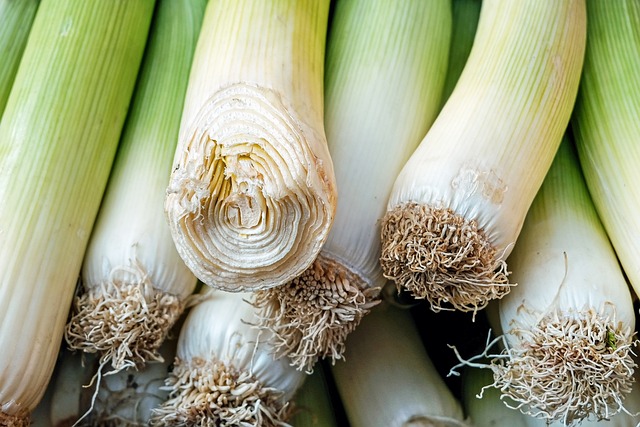
No. Leeks are toxic to dogs. They’re members of the Allium family alongside onions, garlic, chives, and green onions, and the toxicology is identical to the rest.
As across the whole allium family, this is an accurate “toxic” label — a genuine, well-documented blood toxin — not one of the overstated reputations the site pushes back on (oregano, lemon, avocado).
Lower Incidence, Not Lower Toxicity
This is the framing to hold firmly, because it’s easy to get backwards.
Dogs are poisoned by leeks less often than by onions or garlic. But the reason is about exposure, not potency: leeks are usually eaten cooked into soups, stews, quiches, and prepared dishes, rather than handed over as raw snacks, dropped as table scraps, or baked into obviously dog-tempting foods like garlic bread. Fewer everyday situations put a leek in a dog’s mouth.
That is not the same as leeks being safer. Gram for gram, leeks are as toxic as any other allium. A whole leek is a substantial mass of allium, and a serving of leek-and-potato soup or a leek-heavy casserole is a real exposure. Cooking doesn’t reduce the toxicity — it just happens to be how leeks usually reach a dog. So “less commonly a problem” should never quietly become “less dangerous.”
The Allium Mechanism, in Brief
Leeks contain the same organosulfur compounds as the rest of the family. They oxidise a dog’s red blood cells, forming Heinz bodies and causing haemolytic anaemia, with the serious signs delayed, typically over 3–5 days. The full dose maths, mechanism detail, and breed-sensitivity notes are on the onions and garlic hub pages; the same clinical thresholds apply here.
Symptoms to Watch For
Early (hours) — gastrointestinal: vomiting, diarrhoea, drooling, abdominal pain, reduced appetite.
Later (typically 3–5 days) — the anaemia: lethargy, weakness, pale gums, rapid heart rate, rapid breathing, reddish or brown urine, collapse in severe cases.
A dog that seems fine the day after a bowl of leek soup is not necessarily clear — the anaemia is the delayed part.
What To Do
- A dog that ate a leek-based dish (leek-and-potato soup, a leek casserole, a quiche): note the amount and the dog’s size and call your vet or an animal poison line. Leek-heavy servings are a genuine allium dose despite being cooked.
- Small dogs: lower threshold to call.
- A tiny incidental amount in a healthy large dog: lower concern, but note it and watch for 3–5 days.
- Don’t wait for symptoms after a significant exposure, and don’t induce vomiting unless a vet directs you to.
Frequently Asked Questions
This FAQ summarises general veterinary toxicology guidance. It’s informational only and not a substitute for advice from your own vet.
If dogs rarely get poisoned by leeks, are they low-risk?
Low-incidence isn’t the same as low-risk. Leeks are just less often put in front of dogs. Gram for gram they’re as toxic as onions and garlic, so a leek-heavy meal is a real exposure.
Does cooking leeks in soup make them safe?
No. Cooking doesn’t remove the toxic compounds — and soups and stews are the most common way leeks actually reach a dog.
My dog ate leek-and-potato soup — should I call the vet?
Yes, if it was more than a trivial lick — estimate the amount, factor in your dog’s size, and call. Watch for the delayed signs over 3–5 days.
About This Guide
This guide was researched and written by Claire Donnelly for Is It Safe For My Dog?. We are not veterinarians. Each guide is compiled from published, publicly accessible veterinary and toxicology sources — for this page, the ASPCA, the Merck Veterinary Manual, and VCA Hospitals — and cross-checked before publication. This is general information; it does not replace a consultation with your vet, and any suspected allium ingestion warrants direct veterinary advice.
Sources for the figures on this page
- Merck Veterinary Manual — Garlic and Onion (Allium spp.) Toxicosis in Animals (allium clinical thresholds and potency; Heinz-body haemolytic anaemia; delayed onset; all forms toxic)
- VCA Hospitals — Onion, Garlic, Chive, and Leek Toxicity in Dogs (leek named and classified toxic; oxidative red-blood-cell damage; onset over several days; clinical signs)
- ASPCA Animal Poison Control — Leek (leeks classified toxic to dogs as an allium)
- ASPCA Animal Poison Control — People Foods to Avoid Feeding Your Pets (allium vegetables listed among foods to avoid; general framework reference)
This page is informational only and does not constitute veterinary or medical advice.